Infrastructure and the US Election

November 2020

This Infrastructure Ideas column examines some of the implications of the contentious US elections for infrastructure investment.  We’ll look at what the elections bode well for (accelerated energy transition) and not so well for (large-scale transport problems), and offer a handful of suggestions for the incoming Biden administration.

One interesting note on which to start is that, while infrastructure-related problems in the US have continued to worsen over the past four years (see America’s Infrastructure Grades), infrastructure slid well down the totem pole of issues in the 2020 election.  Infrastructure was well-debated in the Democratic primaries, with the Klobuchar campaign plan probably the strongest of plans put forward by candidates, and the “Green New Deal” emerging, but the topic was largely overshadowed in the general election.  By comparison, with its dueling trillion-dollar campaign plans, infrastructure issues were much more visible in the 2016 US election.  Infrastructure’s visibility was nothing compared to the high-water mark it reached in North America, the 2012 Mexican presidential election where making energy costs competitive with the US was arguably the number one campaign issue.  This does tell us that, as has been the case so often, practical matters such as infrastructure, however important and well-conceived they may be, are no match for populist rhetoric (or a pandemic) in appealing to voters.  At least at the national level.

What can we expect for infrastructure in the US come 2021?  The new administration will walk into a situation of sharply diverging trends.  On the negative side, much traditional infrastructure has gone from bad to worse: mass transit, interstate transport, roads and bridges, rail transport.  Long-deferred maintenance and capital investment has largely continued to be deferred since 2016.  The Trump tax cuts further weakened the ability of the federal government to pay for any large-scale investment program, while COVID-19 reduced user revenues for passenger transit across the country.  On the positive side, continued technology advancements have further reduced the cost of renewables and electricity generation.  It is now far cheaper to power pretty much anything than it was 5-10 years ago, and even with the COVID pandemic raging renewable energy generation has kept growing. Energy cost problems are now largely a thing of the past, and the big debate now is rather over accumulated environmental externalities, climate change and the pace of transition.

In transport, there are some grounds for (faint) optimism.  The main issue which the Biden administration will face is an issue which has been front and center for decades: where’s the money?  Constrained public funding has been a roadblock in the US for a very long time.  The massive fiscal effects of the combined Trump tax cuts and COVID have not helped the situation: the Biden administration will have to hope for the longshot of either democrats controlling the senate by winning one of the two January run-off elections in Georgia, or that the stance of senate republicans turns cooperative in a way we have not seen in a long time.  It is conceivable that this could be the one area of bipartisan action, a thesis infrastructure champions Tim Kaine (D-Va) and John Cornyn (R-Tx) have been pushing.  At the city and state level, ability to find capital for large-scale transport investments will also be the big issue, especially with COVID affecting city and state finances, although the politics are generally much less complicated than at the national level.  Public-Private Partnerships (PPPs), which are underutilized in the US relative to the rest of the world, could be a way forward – drawing in plentiful long-term private capital for infrastructure financing.  However PPPs, and any infrastructure asset ownership by the private sector tend to be distrusted by progressives in the US, and currently suffer from a pair of highly visible black eyes, the Purple Line and Silver Line mass transit projects in the Washington DC area (see A High Profile PPP Comes Apart and the Silver Line to Dulles).

The energy sector has more low-hanging fruit for a Biden administration.  Electricity generation is fully private funded, and delivering increasingly lower costs with lower emissions.  The key issues for policy do not require the large amounts of capital which transport does.  The questions are rather how to accelerate the speed of the transition towards low-emissions, through encouraging faster development of energy storage, facilitating long-distance transmission of renewably-sourced electricity, and bringing forward the decommissioning of fossil-fuel based generation facilities.  One can safely expect even more of a boom than we see today for energy storage companies, the return of fiscal incentives for wind and solar development, and the elimination of trade barriers on components for renewable generation plants.  One can also expect tensions between a desire to increase the geographical market for wind power generated on the Great Plains, and “not-in-my-backyard” concerns over new, large-scale power transmission lines.  And one can expect major tensions between on the one hand goals to hasten the decommissioning of coal-fired plants, and to discourage the building of new natural-gas fired generation, and on the other hand concerns about the impact on communities and workers involved with fossil fuels (see Prospects of a Republican Senate Majority narrows Democrats Clean Energy Options).

There are a few suggestions one can make to the incoming Biden administration to better navigate the infrastructure challenges it will face.

  1. Facilitate cooperation and coordination within the energy storage sector.  There are fascinating developments taking place in energy storage technologies, and great advances are being made.  But accelerated deployment of energy storage – with its important implications for emissions reduction and climate – will depend on policy-makers across many different levels being able to rapidly understand what their policy options are, and on large-scale and coordinated production and distribution of storage assets.  Policy encouragement can play a major role here, without the need for large-scale public investment.
  2. Prioritize the design and execution of concrete alternatives for communities affected by job losses where coal and other fossil fuels are being decommissioned.  This could go a long way to reducing the politically-charged and politically-powerful opposition to the ongoing energy transition.  Much can be accomplished by the sharing of best practice and experience in this area, as evidenced by the work in other countries of the World Bank’s Community Development group (CommDev).
  3. Facilitate best-practice sharing between cities and states.  Most cities and states enjoy stronger political consensus than the US as a whole.  Voters in the 2020 election in many cases supported local bond referendums for infrastructure projects.  Several cities and states also continue to show more appetite for PPPs than the Federal government.  Because of their more limited experience and administrative base, the smaller governments in cities and states also need more help in avoiding reinventing the wheel, and/or in adopting design and execution approaches that have worked elsewhere.  Groups like C40, which focuses on climate leadership at the city level, have demonstrated that there is widespread appetite for best-practice support, and that this can reduce the time and cost to move forward on infrastructure projects.
  4. Finally, leadership matters.  Infrastructure issues are complex.  The inability of senior leaders to listen to inputs from different sources will inevitably doom any complex plans, especially those dependent on implementation across many actors.  As a consultant to the Infrastructure Task Force created by the Trump Administration in early 2017, this author has seen how quickly politics and an inability or unwillingness to listen can shut down any high-powered team.  To date, President-elect Biden has indicated a willingness and an interest in gathering ideas and concerns: he’ll need all of that to make headway on the country’s infrastructure issues.  Time will tell!
A High-Profile PPP Comes Apart

October 2020

Earlier this month in Maryland, the state government took over the $5 billion-dollar Purple Line mass-transit project.  Running 2 ½ years behind schedule, close to $1 billion over budget, and still with some $1 billion of work to go, the takeover officially brands as a failure one of the most ambitious and largest Public-Private Partnerships under implementation across the world, let alone the United States.

The high-profile flop comes at an important time for Public-Private Partnerships (PPPs) across the United States.  A widely used method for building infrastructure in Europe, Canada, and increasingly in Emerging Markets, PPPs have never fully caught on in the US.  Some parts of the US see PPPs as central to state or municipal-level infrastructure development: Virginia, across the Potomac River and next-door from Maryland, is a notable example.  PPPs were also central in the (brief) discussions about a “trillion-dollar infrastructure initiative” in the first year of the current US administration.  Yet suspicion about the use of the private sector in infrastructure remains politically strong, especially though not only in democratic circles.  With the continued federal policy inaction and deterioration of infrastructure across the country, the likelihood of a major infrastructure plan coming forward in 2021 to finally address the situation is growing.  How much such a plan turns to the private sector and to PPPs may well be affected by the Purple Line saga.

Purple becomes Black and Blue

The Purple Line is the latest color-coded line addition for the Washington DC subway network.  The 16-mile East-West line is intended to use light-rail to connect a number of suburbs in the state of Maryland, from New Carrollton to Bethesda, complementing existing lines which mostly flow in and out of central Washington.  The project is designed as a 36-year build-finance-operate-maintain Public-Private Partnership, administered by the state of Maryland’s Transit Administration (MTA), with service originally slated to begin in 2022.  In 2016, Purple Line Transit Partners, a consortium headed by Fluor Enterprises, was announced as the winning bidder selected to partner with MTA on developing the project.  The consortium members also included Star America and Meridiam, a leading infrastructure investment fund which is the largest equity partner in the project.  The partners beat out three competing bidders led respectively by Vinci/Alstom, Macquarie/Skanska, and Edgemoor/RATP (the development arm of the Paris metro).  With a $5.6 billion contract, the project is believed to be Maryland’s most expensive government contract ever, and is one of the largest PPPs anywhere.

Problems began early for the Purple Line.  Construction began only in August 2017, delayed by a lawsuit over environmental impacts.  More disputes followed – over timing of right-of-way acquisitions and further environmental permits, and the contractors began filing major time extensions.  Relations between the MTA and the consortium deteriorated, and by the Spring of 2020 the project was over two years behind schedule and overruns had topped $750 million.  In parallel, consortium-leader and construction contractor Fluor began experiencing significant financial pressures, driven by cost overruns on multiple projects and an SEC investigation.  The MTA and the Purple Line Transit Partners spent several months arguing over the growing financial gap, without coming to agreement, and in August Fluor announced it would quit the project over the cost overruns.  The MTA this month took over hundreds of subcontracts to continue construction, and over $1 billion worth of project bonds have been downgraded to junk bond status. 

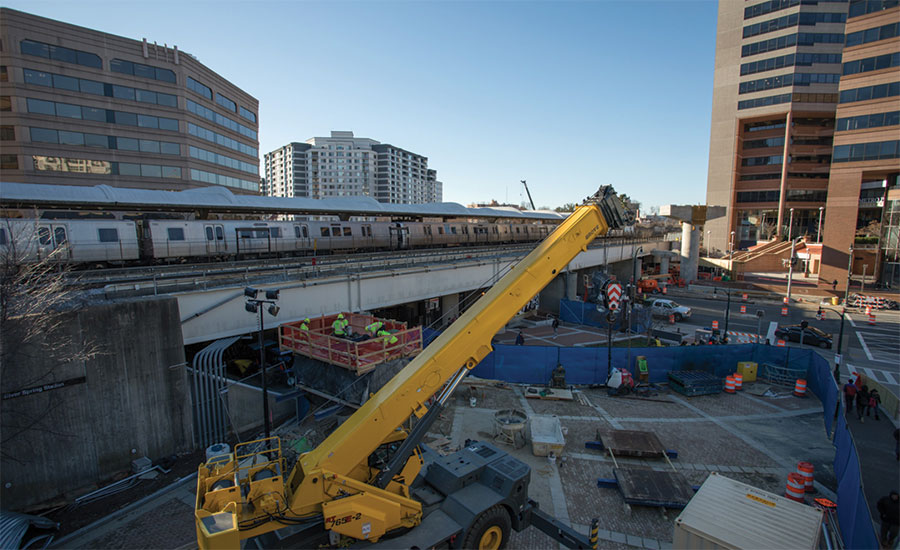
Purple Line Construction in Maryland

Whether the project ever reaches closure, or Maryland is left with a string of partially-completed stations and rail lines, is highly uncertain at present.  The state is now managing the project in the short-term while the MTA figures out a longer-term plan for finishing — and paying for — the remaining $1 billion worth of construction.  The contracts that the state has assumed include the manufacturing of the light-rail vehicles, the eventual operations and maintenance of the rail line, erosion and sediment control, relocating overhead electrical wires and underground utilities.  Officials say they will decide in the coming months whether they will continue managing the project, seek a new construction contractor or procure another public-private partnership.  It is unclear how much the various options would cost or how the state would pay for them at a difficult time for the state budget (see the Washington Post’s “Maryland likely to be on the hook for millions”).

Implications for PPPs

The troubles of the Purple Line are likely to have an impact on Public-Private Partnerships across the United States.  The Purple Line has received national attention as one of the first U.S. transit projects to be built via a public-private partnership, including private financing.  Public-private partnerships have begun to gain popularity with cash-strapped governments.  Now, from a rail project once touted as a national model of how governments could partner with the private sector to build expensive infrastructure, it is now receiving much less attractive national attention.  The risk of the Purple Line being abandoned mid-construction comes at a time when the likelihood of a major push soon on infrastructure investment in the US is growing more likely.  Leaders on infrastructure on both sides of the aisle in the US Senate, Tim Kaine and Rob Portman, have been signaling that they expect a major infrastructure bill to go forward in 2021, irrespective of the outcome of the November election.

PPPs as a whole generally have achieved positive results.  A World Bank study found some 2/3 of PPPs reviewed achieved intended development outcomes, as did over 80% of PPPs supported by the International Finance Corporation (IFC).  When well-designed and executed, PPPs can balance the public policy objectives of governments and the financial and construction capabilities of the private sector.  They can facilitate tapping private capital when government funds are scarce, and can improve and make more consistent delivery of key services.  Studies have shown that failures, cost overruns and delays tend to be more common in purely public-sector managed projects than in PPPs.  Yet PPPs are no guarantors of success – things do go wrong, and they tend to have one very large area of vulnerability: they are often highly visible, and easily politicized.  So individual project failures for PPPs gain far greater visibility than those of “normal” infrastructure projects, and are more easily turned into emblems of a particular administration’s “failure” than are problems with state-run infrastructure, or even the inability to deliver new infrastructure investment or improved services.  Virginia, for example, has many successful PPPs in operation, yet a lot of political attention focuses on the failure of a PPP tunnel in Norfolk.  Miami-Dade County officials only last week postponed consideration of a planned monorail project led by Meridiam Partners and also involving Fluor, citing among other things the experience of the DC area’s Purple Line project.

By contrast, what often separates successful from unsuccessful PPPs is neither glamorous, nor highly visible.  Attention to detail, both in design and administration of PPPs, is the single most important element of success.  Attention to detail can avoid mistakes in agreement on arcane provisions in risk-management, like the ones that bankrupted the city of Harrisburg years ago on a contract for a new incinerator.  The Purple Line’s PPP contract is over 800 pages long, and yet those 800 pages failed to clearly delineate the responsibilities now being argued over between the state and the consortium.  Indeed, the most common factor in PPP problems has tended to be a rush to get deals done on the part of government officials.  A rush tends to push toward simplification, which is in principle fine but often translated into making bidding by potential partners only an issue of lowest cost, without enough attention to contract provisions for delivery, quality and dispute resolution.  The Purple Line bidding process was done on a pure low-bid basis, and there were early rumblings that Maryland pushed the bid too fast, and left too many issues open – in spite of the 800-page contract.

We’ll see what the future holds for light-rail service in the Maryland suburbs, for Fluor and the project partners, and for lessons drawn from the government’s takeover of the Purple Line.  Two things for sure: you can expect plenty of discussion about infrastructure in the US in 2021, and every time PPPs come up as part of the solution, the Purple Line will be part of the discussion.

The Water Wars are Here

September 2020

As we write in mid-September, Hurricane Sally has stretches of the US Gulf Coast well under water, and Japan is still recovering from the flooding of Typhoon Haishen.  Yet while way too much water is the problem in some places, not enough water is the big problem elsewhere.  A Washington Post headline on September 15 captures the latest example: “Mexican famers occupy dam to stop water payments to the United States.”  Infrastructure Ideas believes we’ll see many more of these types of headlines, and in this issue we’ll explore some of the implications for infrastructure.

The ongoing conflict in the Mexican state of Chihuahua featured in the news is tied to a long-standing, complex arrangement.  Under a water-sharing treaty signed in 1944, Mexico and the United States annually send water for irrigation across the border in both directions – three-quarters flowing south to Mexico.  The issue which has flared up now is the different geography of water flows: Mexico’s share is sent north from the Rio Grande and Conchas rivers, mostly from Chihuahua, while the US share is sent south from the Colorado River elsewhere along the border.  Local farmers in Chihuahua have occupied the Boquilla dam, on the Conchas River, to protest the central government’s sending water across the border.  Mexico’s national guard was sent to clear out the protesters, killed one protester and failed to dislodge the farmers.  A leader of the protest said “We tried to have a dialogue, but nobody listened to us.  We are prepared to stay here and defend our rights to this water.”  A second protest broke out this past weekend at the Cuidad Juárez border bridge, demanding justice for the death at Boquilla and the cessation of water flows.

Mexican Riot Police Guard Dam in Chihuahua (Washington Post)

Leaving aside the specifics of the Chihuahua situation, one does not need to go far to observe similar protests.  Driving last week in record-breaking heat along California’s Central Valley, we could see every twenty miles or so, interspersed among the unending line of fruit orchards, signs calling for more dam-building to provide water to the Valley’s farmers. 

Published in the New York Times

In the American West, conflicts over insufficient water supplies have raged for over a century, though not coming (at least recently) to the armed conflict appearing in Chihuahua.  As Climate Change creates more drought conditions in more places, these conflicts will only grow.  While some of the coverage of the issue tends to melodramatic and/or dystopian, the science behind what will happen and where is getting much more precise.  Over 500 past and present water-related conflicts are catalogued by worldwater.org, and earlier this year a new analytical tool was launched to help predict where such conflicts might arise, and it is not too early to focus on the practical infrastructure consequences.

We see five principal implications from these growing water shortages for infrastructure:

  1. more demand for long-distance water transport
  2. lower reliability of the same, and need for investors to focus not only on support from political leaders, but also broader support from local population,
  3. more demand for local/smaller dams
  4. greater focus on efficiency of water infrastructure
  5. a push for more widespread pricing of water

Let’s look at each of these implications in turn.

More demand for long-distance water transport.  Three inter-related drivers will create growing demand for water pipelines and canals: increased Climate-Change related water-stress in many places, population growth, and continued growing urbanization.  These drivers will mean that at the same time cities demand more water for taps and showerheads while farmlands demand more water to grow the food that increased numbers of city-dwellers consume.  Local water sources, whether from rivers or underground water tables, in many areas either are failing to keep up with demand growth or diminishing altogether.  Cities have historically found it more politically expedient to address such problems first by buying needed water from elsewhere, before asking their citizens to change their ways.  In some cases that elsewhere can be a very long ways away: the longest water pipeline today is the “Great Man-Made River,” which stretches over 1,000 miles and provides water to the main cities of Libya.  It will soon have a rival for this distinction, as the “North-South Water Transfer Project” in China, under construction since 2015, aims to deliver water to China’s southern cities over close to 2,000 miles of pipelines.  The Trans-Africa Pipeline (TAP), now on the drawing board, seeks to pump water across the Sahel over an even longer 5,000 miles.  Most future pipeline projects won’t be this long, but they will still be long enough to very expensive, both in construction and operation – as moving water across long distances is highly energy-intensive (when water is not being pumped up hills, dampers have to slow the water on downhills).  Both the politics and the economics of these projects will be immensely challenging, but nonetheless we can expect to see their numbers rise.

Lower reliability of long-distance water transport arrangements.  More demand is not the same as more reliability.  The current conflict in Chihuahua perfectly illustrates the dynamics that are likely to accompany a number of water pipelines or canals.  Recipients insist on receiving their contracted allotments, climate change creates unforeseen water stresses in the area sending water out, and local populations protest decisions made by central authorities elsewhere.  For those relying on the pipelines, or in the case of private financing those investing in the projects, the lesson is to not rely solely on agreements made by central political leaders, but to understand the degree of support from the local population in the area from which the water is coming.  This political risk will layer on top of good old-fashioned construction risk, with high chances of major delays and cost overruns in these types of projects, while Global Warming will increase evaporation in many canal-based systems (between 2000 and 2014, the inflow to the Colorado River went down by nearly 20%, with 1/3 of that reduction from global warming).  Infrastructure Ideas has also written previously about the growing cyber-risks associated with some infrastructure systems, and long-distance water transport control systems could be a prime area of vulnerability.

More demand for local/smaller dams.  Where bringing water from far away is too difficult, too expensive, and/or risky, we will see demand for local authorities to create insurance in the form of more close-by reservoirs.  The current advocacy by large-scale agro-industry in California Central Valley is one of many examples.  In many cases, such projects will be politically appealing, but not always likely to solve the underlying problem – dams not receiving enough supply of water will themselves become dry, which is part of the problem at the moment in Chihuahua.  Dam-building also suffers from a high degree of construction delay and cost overrun risk, and potential co-benefits from dams which may be argued by producing clean energy are likely to bump into the increasingly unattractive cost of new hydropower generation.  Nonetheless, we expect that political appeal will see an increase in this type of infrastructure projects.

A greater focus on efficiency of water infrastructure.  Efficiency has historically been the poor stepchild of the water sector.  Up to 30-50% of water supplies are lost in pipelines, whether long-distance or simply in consumer distribution systems, due to a combination of poor management and other priorities.  Among other things, shiny new pipelines or treatment stations have always looked politically more appealing than the nitty-gritty of reducing leaks.  As more places feel the pinch on water supplies, and the difficulties of executing large construction projects such as pipelines and dams become more apparent, we can expect efficiency to climb up in priority.  There is no shortage of examples of better technology and practices from which city authorities or water management companies can choose.  Among others, miniaturized, submersible drones are likely to become in high demand as a tool for reducing the costs and improving the speed of finding and fixing leaks (see Infrastructure Ideas’ “The Drones are Here” for previous coverage).

More widespread pricing of water.  “Free water” is an idea which is politically and ethically appealing.  In low income areas, the argument for free water will remain strong.  Yet at the same time, the absence of economic incentives for avoiding the waste of water – especially for large users – has long been an impediment to water conservation and efficiency.  For the same reasons as discussed immediately above, one can expect that a greater focus on efficiency of water infrastructure will be accompanied by a push for more widespread pricing of water.  This in turn will enable more cities and regions to tap into private capital for financing a part of their growing bills for water infrastructure – if they can overcome political resistance.  As has been seen in many places, that resistance is often the fiercest coming from large users, and not from poorer segments of the population.

It would be nice to be able to give a sixth likely infrastructure implication from the growing incidence of water conflicts: greater policy coordination.  The non-existence of such coordination or cooperation in many places is a large factor the spreading geography of water shortage, the American West being one of the most prominent examples.  Unwillingness of political actors to speak with each other, or the inability to maintain such dialogue consistently, bedevils water use from the Nile to the Himalayas to Indochina.  Regrettably, with populism on the rise in so many places, trailing unilateralist tendencies in its wake, it seems hard to imagine greater policy coordination on the horizon anytime soon.  One can always hope.

Revisiting Micromobility

August 2020

In June of 2018, Infrastructure Ideas ran a series on the Mobility Revolution (an overview, implications for investors, and implications for policy makers).  Two years on, let’s see how the world has changed.

The Mobility Revolution continued at high speed through the rest of 2018 and 2019, and micromobility had as bright a future as any industry at the end of 2019.  In 2018, the number of rides Americans took via dockless scooters, bikes, and traditional bikeshare systems more than doubled from 2017, to 84 million trips.

Micromobility Trips

McKinsey was predicting the industry would be a $300-500 billion market by 2030, and Barclays went even better, projecting micromobility as a nearly trillion-dollar business in a decade.  For investors struggling to find bright spots in the infrastructure world, this was a big piece of the future.  Ride-hailing giants were at the forefront of acquisitions: Uber acquired Jump Bikes in May 2018 for $200 million, and Lyft acquired Motivate, the country’s largest operator of traditional bikesharing systems.  Two Chinese bikeshare firms, Ofo and Mobike, arrived in the United States, and together raised over $2 billion in venture capital funding.  In fact, Venture Capital investment in urban technology, mostly mobility, surpassed that in pharmaceuticals from 2016 through 2018.

Mobility numbers looked good during 2019: Lime surpassed the 100 million ride mark, and three other providers passed 10 million rides for the first time.  There were some significant shifts across segments, and bad news for some – mainly in bikeshare.  The two Chinese giants crashed and burned, with Mobike being sold and retreating from foreign markets, and Ofo going bankrupt in June.  Uber’s acquisition of Jump Bikes went south, and it sold the small remnant of the company to Lime in early 2020.

Then came the pandemic.

In the first half of 2020, with concerns over COVID infections, macro and micro travel came to a grinding halt.  In the cities where micromobility had been booming, people now worked from home instead of commuting, and curtailed outings to see friends, go to the gym, and eat meals.  Ridership, revenue and investment in mobility all plummeted.  Based on an analysis of Apple iPhone data, the number of passenger-kilometers traveled by private and shared micromobility vehicles decreased by an estimated 60-70% in Europe and the United States since the onset of the COVID-19 crisis.  Several providers halted operations in different markets, and laid off large parts of their workforce.  An article in Wired Magazine asked: is Micromobility a bust?

It is impossible to know exactly what the future holds, for this “aspiring trillion-dollar business,” which lost half its market in six months.  But some optimism may be in order.

For those who survive, the future may not look so bad.  As reported by Bloomberg’s Laura Bliss in early August, micromobility is already showing signs of life.  In American and European cities that have made progress on reducing the incidence of COVID-19 and in reopening their economies, demand for electric scooter, bike, and moped rental services is growing again.  It appears that compared with “closed-space” transport alternatives such as car-share and mass transit, being exposed to the air on a bike or scooter – only needing to wipe down and disinfect handles – feels like a healthier and lower-risk transport option for clients.  Ford’s scooter subsidiary, Spin, has reported an increase in ridership in cities where lockdown restrictions have eased. Lime reported record growth in new user signups and in ridership in some cities.  Gotcha, which operates fleets of shared scooters and bikes, reported spikes in the number of rides, the number of unique riders, and average trip length in many of its markets.  So it seems that some of the people who stopped getting on shared bikes and scooters have decided to get back on them.

Beyond this short-term rebound, there are also a number of underlying developments which may bode well for micromobility companies in the longer term.  These include: average trip lengths increasing, dedicated lanes becoming more widely available, more commuters are getting into the act, and less competition.

Longer trips by riders should mean better revenues per trip, and better asset utilization.  Industry giant Lime reported a 34% increase in average trip durations during the second quarter, as well as a similar increase in average trip distances, to now over two kilometers. Shared moped operator Revel measured similar upticks. Data from Ford’s Spin subsidiary shows significant growth in trips of two kilometers or longer in several cities in May 2020, compared with a year earlier, and a 44% increase in average trip duration.

Worldwide, the lockdown has driven an increased focus on bicycle lanes. Better cycling space and less battling with automobile traffic should encourage more riders and more trips.  Milan has announced that 35 kilometers of streets previously used by cars will be transitioned to walking and cycling lanes after the lockdown is lifted.  Paris will convert 50 kilometers of lanes usually reserved for cars to bicycle lanes, and plans to invest $325 million to update its bicycle network.  Brussels is turning 40 kilometers of car lanes into cycle paths.  Seattle permanently closed 30 kilometers of streets to most vehicles, providing more space for people to walk and bike following the lockdown.  Montreal announced the creation of more than 320 kilometers of new pedestrian and bicycle paths across the city.

The penetration of the commuter segment, in addition to the leisure and impulse segment, would also hold the potential for significant revenue increases for micromobility providers.  Some of the first positive indications in this regard are coming out of Germany.  Here Spin reported from a customer survey that one third of Germans “believe there will be a reduction of car traffic around inner cities in a post-pandemic world and favor the use of micromobility vehicles such as e-scooters.”  “Spin scooters are being used now more than ever as a utility rather than for leisurely activities,” said Euwyn Poon, Spin’s President.   Location of scooter usage also illustrates this new trend.  Downtown areas were formerly the hub of activity for scooter companies, with white-collar workers using the vehicles to commute short distances to work or to grab lunch or coffee during the workday. But in the era of remote work, residential neighborhoods have become new micromobility hotspots, according to maps of Lime rentals in San Francisco and Berlin.   Demand for longer-term rentals is also materializing.  Spin now rents its scooters by the month in San Francisco; a similar option is available for e-bike rentals for delivery workers in Washington, DC. Unagi, a scooter maker that sells directly to customers, introduced a monthly subscription option for riders in L.A. and New York earlier this month. Bird and Lime have offered monthly rentals for their vehicles since spring 2019.

McKinsey believe (The Future of Mobility) that private- and shared-micromobility solutions will experience a complete recovery in the number of passenger-kilometers traveled, with no significant drop from pre-crisis levels.  With what we are seeing, this increasingly looks like a good bet.  But usage is only one part of the story.

Making money has been the big issue for micromobility providers during the pre-2020 growth period.  Now with a number of players exiting, through closure or acquisition, the financial picture should look better.  If forecasts of market size in the range half a trillion dollars materialize, even a few years later than originally forecast, we’re talking about a business on the order of 15-20% of total global infrastructure investment.  Hardly anything “micro” about that.


The Future of Natural Gas Pipelines

July 2020

The month of July was not kind to the Oil & Gas pipeline business.  In a span of days, three major US pipeline projects were halted, in three different parts of the country.  The headliner was the Atlantic Coast Pipeline, a US$8 billion 600-mile natural gas pipeline project across West Virginia, Virginia and North Carolina: at the end of June, sponsors Dominion Energy and Duke Energy won a major battle at the US Supreme Court, receiving approval to cross the Appalachian Trail; a week later, the sponsors issued the stunning announcement that they would no longer seek to complete the project.  That same week, the Dakota Access Pipeline, after years of protests and battles with lawsuits, was ordered by a Federal Judge to cease transporting oil from the shale-oil fields of North Dakota to the Gulf of Mexico.  The Williams pipeline was intended to bring Pennsylvania fracked natural gas to the New York City area through a 200-mile pipeline, at a cost of over $1 billion, but – again the same week — failed to obtain its needed permits from either the state of New York or the state of New Jersey.  Yet another project, which has faced high-profile legal challenges for years without getting off the drawing board, the Keystone XL oil pipeline, saw an appeal from the current US administration to let it proceed turned down by the US Supreme Court.  A New York Times headline at the end of the week asked “Is This the end of New Pipelines?

Infrastructure Ideas had reviewed recently the prospects for the Natural Gas business as a whole (“What Next for Natural Gas?” from June 2020).  This post takes a follow-on look at the business of natural gas pipelines.  And a rising new competitor in energy transport.

It seems like only yesterday that the natural gas pipeline business was booming, a bright spot where so few large infrastructure projects were proceeded.  In the US alone, there are ongoing projects involving some $60-80 billion of investment in Oil & Gas pipelines, and projects worth close to $100 billion more have been announced.  Now the future looks uncertain, at least for any pipelines crossing outside of Texas and neighboring friendly states.  The same factors that have turned the situation upside down in the US are not yet playing out with the same visibility in the rest of the world, but one should expect that they will.

Environmentalism gets the loudest credit for derailing the pipeline projects in the news.  In the case of the Atlantic Coast Pipeline, legal challenges – based on “Not in My Back-Yard-ism,” environmental concerns along the planned pipeline route, and climate change concerns – had major impact.  The estimated costs of the project rose from $5 billion to $8 billion due to the related delays, and even a Supreme Court victory on one issue was no insurance against the risk of successful challenges on other issues.  Dominion CEO Thomas Farrell told investors “To state the obvious, permitting for investment in gas transmission and storage has become increasingly litigious, uncertain and costly.”  A piece in Forbes along the same line pointed out that pipelines were increasingly losing in the courts.

One aspect worth noting of the court decisions tilting against pipelines is the role of insufficient due-diligence.  The current US administration, among others, has sought to increase the level of infrastructure investment by encouraging the bypassing of environmental and social reviews, which is precisely what sank the Dakota Access Pipeline.  In the case of the ACP, judges repeatedly found that reviews had been inadequate and incomplete, forcing delays and cost increases.

Yet while environmentalism played a major role, what really bodes ill for the pipeline business, and what underlay the decisions made this month going against the projects, is economics.  The price of electricity from wind and solar increasingly is beating the price of electricity generated from natural gas.  Economics going forward will only get worse.  Technology is continuing to make solar and wind power cheaper, while natural gas prices are now, on the one hand, too low to enable many players in the business to stay afloat and explore and develop more gas reserves, and on the other hand being pushed up as the cost of transport pipelines are going up.  Combine this with the kind of regulatory concerns over emissions which have been growing in the US northeast, and more recently Virginia, and you have a battle going increasingly in favor of renewables, and increasingly against natural gas.  A report out of the Goldman School of Public Policy in Berkeley last month went as far as claiming that the US electricity grid could lower rates while getting 90% of its supply with no greenhouse gas emissions by 2035.

In a tell-tale sign of how big the ongoing shift is, the same day that it and Duke Power announced they would abandon their $8 billion project, Dominion Energy also announced that it would sell most of its natural gas assets to Warren Buffet’s Berkshire Hathaway, in a transaction valued at close to $10 billion.  The sale includes over 7,000 miles of natural-gas pipelines.  For a utility that has relied almost exclusively on coal and natural gas, and been one of the staunchest defenders of fossil fuels, the two announcements heralded a major watershed.  Dominion, the 6th largest US utility by revenue, will instead shift its business to wind and solar power.  It is already competing to become of the largest players in the burgeoning offshore wind industry (see “Offshore Wind: the Next Big Thing,” January 2020).

Coincidentally, the book out this month Lights Out: Pride, Delusion and the Fall of General Electric by a pair of Wall Street Journal reporters, focuses on the massive losses incurred by GE Power, one of the biggest players in the energy business worldwide.  Most of the blame for these losses, along with general opacity of finances and practices, is laid in the book at the feet of decisions made by former GE CEO Jeff Immelt to bet the house on natural gas – especially with his single largest acquisition, that of French natural gas turbine producer Alsthom.  Too much, too late, for the natural gas business.

Contrast the fate of the O&G pipelines with that of the Grain Belt Express.  One big energy transmission project which is going forward in the US at the moment is the 800-mile, $2.3 billion, 4-Gigawatt high-voltage power transmission line, which will tap convey wind-generated power from Kansas through Missouri and into Indiana and Illinois.  This is also a new generation of energy transport: the high voltage DC/ Direct Current line. Today’s transmission lines run on alternating current, and AC transmission involves significant energy losses over distance.  In a future where renewable energy resources are often located far from the centers of consumption, long-distance DC lines like the Grain Belt Express will be a major focus of new infrastructure investment.

Outside of the US, chances are that new opportunities to invest in natural gas pipelines will also be limited.  China is certainly one place where more will be built.  But there the assets will be owned by the Government.  The Government announced in late 2019 that it would establish a National Oil & Gas Pipeline Company (“Pipe China”) by combining pipelines, storage facilities and natural gas receiving terminals operated by China National Petroleum Corp (CNPC), China Petrochemical Corp (Sinopec Group) and China National Offshore Oil Company (CNOOC).  Beijing aims to complete the asset transfers and start operation of the new entity – valued by industry analysts at more than $40 billion – by October 2020.

In Europe, the mega-project pipelines envisaged to bring either Russian or Caspian Sea natural gas to western Europe consumption centers will face an increasingly precarious future.  Incentives to built wind and solar resources have always been more generous in Europe than elsewhere, and combined with the ever-cheaper availability of wind and solar, will make natural-gas generated electricity begin to look like an expensive choice.  We can also anticipate that, as concerns around climate change continue to grow, political pressure to reduce or eliminate energy-sector greenhouse gas emissions will be strongest in Europe.  This is increasing the risk that, even with long-term offtake contracts in place, the owners of pipelines bringing natural gas to Europe will face the kind of scenarios which have played out in the US this month: legal challenges and regulatory decisions that shorten their life-span significantly.

In the rest of the world?  LNG import terminals will retain their attraction for a time, as they raise few of the local environmental and social concerns, notably rights-of-way, which arise with pipeline construction.  But the future of within-border energy transport increasingly looks to be with long-distance DC electricity transmission lines, and not with natural gas pipelines.


An Infrastructure Bright Spot: EV Charging

June 2020

Looking for an infrastructure sector doing well in spite of COVID-19?  Try Electric Vehicle Charging Infrastructure.  EV charging reached one milestone this month, with another prospective major one also announced.  Investors have been noticing, and the prospective market is large.

On June 17, Electrify America announced that they had completed the first cross-country fast charging EV corridor, from Washington DC to Los Angeles.  The new direct current fast charger network stretches close to 3,000 miles over 11 states, with an average 70 miles between stations.  Electrify America runs the largest open DC fast charging network in the US, and plans to have a second cross-country route — Jacksonville to San Diego – completed by September.  These East-West corridors complement their existing north-south open access corridors on both coasts.  The range of the average EV is now, according to Consumer Reports, 200 miles per charge, putting the stations well within the range of all EVs.

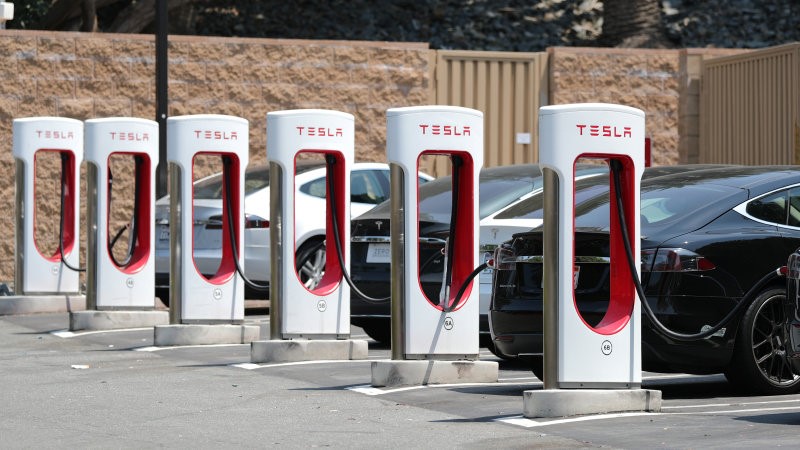
Tesla Supercharger station

On June 18, a consortium of utilities proposed building a corridor along Interstate-5 on the West Coast for electric truck charging stations, called the West Coast Transit Corridor Initiative.  High-volume charging stations would be established every 50 miles along the way, as well as one feeder routes.  The plan calls for availability to medium-duty EVs by 2025, and large trucks by 2030.  Estimated price tag is $850 million.

We can see that, whereas EV producers and renewable generation companies’ shares have been hit by the decline in energy demand during the pandemic, startups serving the EV charging market have continued pulling in new investments in spite of the uncertainty.  Of late these include managed fleet charging specialist Amply, which raised $13 million, FreeWire Technologies, whose chargers use batteries rather than the grid, which raised $25 million, HEVO Power, a specialist in wireless charging which raised $5.5 million, and Australian fast charger company Tritium, which secured $45 million in debt.

The COVID-19 pandemic has slowed EV sales of electric vehicles, but their efficiency advantages over combustion engines continue to grow (Lyft just this week announced a commitment to full electrification of its fleet), and the market for supportive infrastructure technology is expected to be quite large.  In the last five years, the number of public EV chargers has increased by about 40% per year, and the Brattle Group projects needed EV infrastructureat between $75-125 billion in the US before 2030, of which $30-50 billion for the addition of 1 to 2 million additional public chargers, another $30-50B for additional generation and energy storage, and $15-25B for related T&D improvements.  Outside of the US, a number of markets are more advanced, notably in Europe and China.  EV chargers now outnumber gas stations in some countries.  Wood Mackenzie forecast last month that between North America, China and Europe, nearly 30 million EV chargers would be installed by 2030, up from just over 3 million today.  With between about 1/3 of these outlets being public stations, this would represent a global market on the order of $150-200 billion over the next decade, with another $200-300 billion for matching investments in generation, storage, transmission and distribution.  These are big numbers.

As noted in previous Infrastructure Ideas comments on the EV charging sector, the business model – and who gets to channel most of this investment – is an evolving question.  Utilities, EV manufacturers, gasoline retail companies, public authorities, and specialized players continue to jockey for position.  A major factor in the US market is a regulatory environment that limits potential ownership of EV charging and related services by utilities.  This opens the door for players like Electrify America, which has taken the lead in cross-country network build-outs, and for car companies, of which Tesla and Ford have been leading the way in EV charging.  The US is also characterized by relatively high penetration of at-home charging point for vehicles, which has been less practical in Europe, and even more so in China.  China’s public charging market is a mixture of utility-owned and privately owned stations, with public incentives for fast-charging outlets.  Regulatory incentives in China also include rules in some cities, such as Shenzhen and Guangzhou, that ban new registrations for ride-sharing with gasoline combustion-engine cars, along with the quota system in some cities that makes the cost of license plates for gasoline-powered cars nearly equal to the cost of the vehicle.

Opportunities for investors and players will continue to expand rapidly in the coming decades, and be more diversified than for EV production itself.  Charging networks will differ geographically, and at least initially by type of vehicle chargeable.  There will be competition on placement of outlets, as well as the type of technology deployed (and therefore the speed of charging), and to some extent on amenities offered while drivers wait.  Charging technology providers should have several waves of opportunities to sell products to operators of public charging points, as the technologies themselves continue to evolve rapidly – along with EVs themselves.  Wireless charging, being tested by HEVO and others, would significantly alter the playing field.  Niche companies, like Amply which specializes in charging fleets, will compete with generalists.  In Emerging Markets outside of China, where deployment of EVs and charge points is still nascent yet where car ownership is expanding faster than anywhere, one can expect another $50 billion-plus market to develop over the next decade/ decade and a half.  Regulation will also play a major role in Emerging Markets, where one could expect, among other things, to see attempts by technology providers to gain exclusive rights in cities and/or countries to deploy charging technologies, as well as attempts by governments to bring providers in by providing exclusive rights.  Procurement practices will make important differences in the speed of deployment, and the costs of EV charging services, in different countries.

As headlined, this is one bright spot in the infrastructure world.  Who will make money, and which business models will succeed, remains to be seen.  What is clear is that there will be a big opportunity cost to ignoring the EV charging business.  Another example of where technology change is driving the direction of infrastructure investments.

What Next for Natural Gas ?

June 2020

2019 was a record year for Liquified Natural Gas (LNG) producers and shippers. Global demand continued to grow strongly, 12.5% from 2018, to a record 359 million tons. Imports grew mostly to Europe, but also to South Asia. Relative newcomers to LNG imports, Bangladesh, India and Pakistan imported a collective 36 MT. Consumption in China, the third largest importer after the UK and France, grew 12%, continuing to outstrip domestic production growth. The year-to-year increase in trade, at 40 MT, was itself another record, and brought the increase for the last four years to 95MT, meaning the LNG market had increased by almost one-third in only three years. The spot LNG market, which facilitated flexibility in sales compared to standard long-term contracts, had grown from just over 10% of the market at the beginning of the decade to nearly 1/3 of all sales. The market had grown so attractive that the rush was on to jump in: 30 MT of new capacity came on stream in 2019 – on top of 100 MT from 2016 to 2018, and financing for 71 million tons of new capacity reached FID. Meanwhile on the domestic side in the US, natural gas continued to be attractive as a source of supply for new power plants as coal capacity is being phased out – with gas now being far cheaper than coal. Of the last 29 GW of coal power generation retired, 23 GW have been replaced with natural gas, especially in the large PJM interconnect market.

2020, after the record 2019, could have hardly have come as a bigger shock for the gas industry. Thanks to COVID-19, 2020 will see the largest annual drop in energy investment in history: 20%, according to the International Energy Association. The projected drop in investment in oil & gas is even larger, 33%, and after the record 2019 for new LNG FID decisions, the expectation for 2020 is… zero. Natural gas prices have been hovering around historical lows of $2/MMBTU. Oil prices have shown some recovery, after the Saudi Arabia-Russia deal to curb surpluses, but the global gas market remains extraordinarily oversupplied. With LNG storage nearing capacity, as happened in April for oil, the worst is likely still to come, and negative prices for LNG cargoes late this Summer cannot be ruled out. Unlike the oil market, there’s been no sign of a coordinated response to address the glut, meaning the fallout could be deeper and longer. For the fracking-focused companies in the US, the outlook was already grim, and it is only getting worse: in 2019 42 E&P companies filed for bankruptcy, involving over $25B in debt. Moody’s noted “We are seeing slowdowns and negative cash flows spill over into the oil services sector that relies on the E&P companies for their business, and heavy hitters such as Schlumberger and Halliburton recorded significant losses in 2019.”

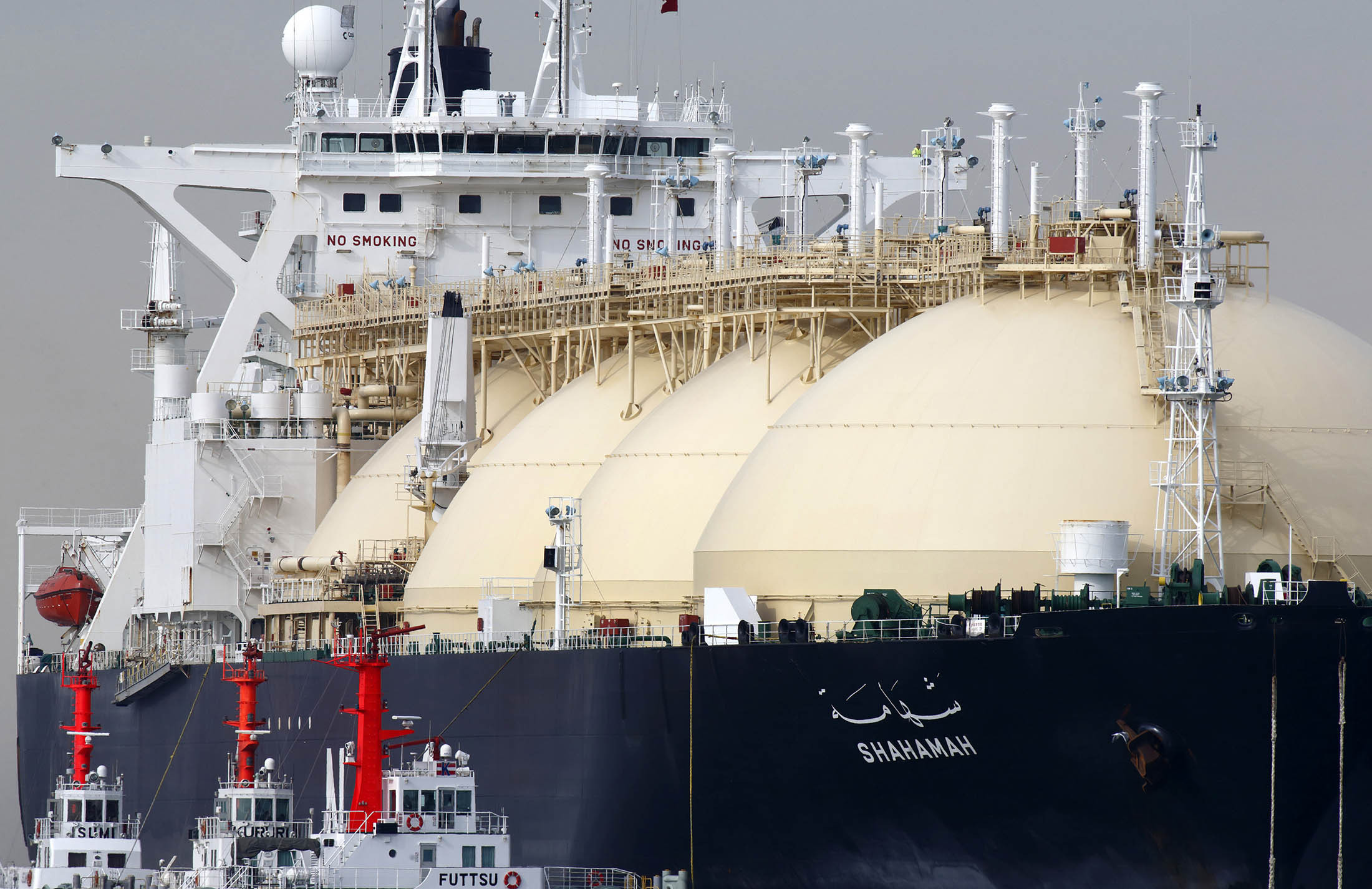
Natural gas tanker

So what’s next?

Optimism has been ruling projections of the future of natural gas for several years. With the increased production from the development of new E&P technologies, and a vast increase in investment in transport capacity, natural gas became cheaper than all other fossil fuels – including coal – and far more widely available than before. With growing concerns over carbon emissions and climate change, gas also benefitted from being seen as better than coal on the environmental side. Forecasts at the end of 2019 projected a near-doubling of global LNG demand from 2018 to 2035 (McKinsey, Shell), outpaced by even faster growth in supply – excess supply was expected to keep prices low into the mid-to-late 2020s. In the US, a 20% growth in demand from the power sector was seen by 2025, and the industry announced plans for some $30B in new interstate pipelines over the next five years. Only the production end, as noted above, was seen as facing continued difficulties.

Optimism is now on hold, pretty much across the board. In one year, LNG prices in Asia – the highest in the world — plummeted from $12/MMBTU to $2/MMBTU. Courtesy of the IEEFA, here is a list of the LNG projects put on hold or cancelled in the last three months:

• March: Santos-Barossa/Darwin (Australia); Sempra-Costa Azul/Port Arthur (Mexico-USA); Woodfibre (Canada); Woodside Energy – Pluto Train 2 (Australia); Shell/ETP – Lake Charles (USA); Magnolia LNG and Bear Head (USA-Canada)
• April: Qatar Petroleum – North Field East (Qatar); Shell Crux (Australia); Exxon Rovuma (Mozambique); Golar/BP Grande Tortue (Mauritania and Senegal); Pieridae/ Goldboro (Canada)

McKinsey’s annual natural gas outlook for 2019 had noted that of the 100 projects potentially planned to add new LNG capacity, each would need a maximum full break-even price of $7 per million British thermal units (MMBTU) to stay competitive: more than three times current prices in Asia – the “strongest” LNG market, with prices possibly heading still lower.

For the US power market, probably the largest user gas user, forecasts from the EIA have now shifted significantly. In 2019 the EIA had estimated natural gas would be the largest segment of the US power market until well beyond 2050, with an 8% higher share than renewables even in 2050. The new 2020 EIA outlook instead sees renewables with a 2% higher share than gas by 2050. Interconnection queue requests across all the major North American markets show that over 90% of new requests now consist of solar, wind and storage. This is spite of gas prices not only being low being getting even lower. The problem? A combination of costs and policy. From a cost standpoint, the fall in natural gas prices is being paralleled by continued technology improvements and falling costs for wind, solar, and energy storage. The cost declines of wind and solar, being technology-driven, are unlikely to reverse themselves, whereas the cost of declines of natural gas, now being driven by supply-demand imbalances, have an unpredictable future. From a policy standpoint, the “climate honeymoon” of natural gas has waned, if not ended. Three converging environmental trends are working against natural gas: (1) growing concerns on the climate front, as this week’s news indicate that even lower emissions during the COVID epidemic do not seem to have reduced atmospheric carbon levels, and climate change projections continue to get worse; (2) new studies of methane leaks are increasingly raising estimated average emissions from natural gas related projects, making natural gas now seem only marginally better than coal on the emissions side, and far less preferable than renewables; (3) studies on fossil fuel pipeline environmental effects are also raising the level of concern of damage from natural gas transport (a study of the 2010-2018 period in the US documented more than 5,500 total pipeline incidents, more than $4 billion in damages, and evacuations of almost 30,000 people – with a strong and unexpected correlation between the number of problems and how new the pipelines were). A number of US cities (San Jose is the largest) and utilities have moved to impose bans on new natural-gas infrastructure. Even existing gas power plants are becoming policy conversation targets, for possible replacement by cheaper renewables: in mid-2018, already, GE closed a $1B natural gas plant in southern California only 10 years into a planned 30-year life. Even the more politically conservative Midwest has seen regulators decline to endorse new gas-fired plants. In Europe, the European Investment Bank (EIB) announced in November that it will stop backing fossil fuel energy investments, including natural gas, in 2021 unless they negate their emissions through carbon capture or offsets.

The answer to what’s next for gas is, well, not much fun. At least for gas exploration, production, and transport companies. On the one hand low prices are likely to persist, which will lead to an increased number of bankruptcies in the E&P sector, and keep investors in LNG liquefication, transport, and gasification on the sidelines for any new projects, possibly into the middle of the decade. In the short-run, existing importers using spot prices (and not locked into long-term contracts) will see a windfall of cheaper gas imports. Importers locked into long-term contracts at higher prices may well take the opportunity to push for downward price renegotiations from suppliers, and in some cases possibly even walking away from contracts: when the contracts were entered into, accessing natural gas supplies looked difficult, in the future this is unlikely to become the case again anytime soon. The decades-long seller’s market is now a buyer’s market, for the foreseeable future. Good for users, but making it even worse for producers. Policy concerns in Europe and the US on emissions will likely keep dampening demand in a way that previous projections had not captured. This will leave Asia as increasingly the only attractive market for sellers. For the power sector, “peak gas” may arrive very soon, at least outside of Asia. In turn, expect natural gas suppliers to become more dependent on non-power demand, where electrification will take longer to materialize. That 100% increase in global LNG demand over the next two decades forecast at the end of 2019? It may have a hard time reaching 50%.

The Airline Shake-out Starts Up

The Airline Shake-Out Starts Up
May 2020

This month saw two of Latin America’s three largest airlines file for bankruptcy: LATAM and Avianca. They are the most visible casualties to date of the unprecedented fall in air traffic since the onset of the COVID-19 pandemic, though they certainly won’t be the last. Today’s Infrastructure Ideas looks at some of the emerging implications for airlines of the unfolding shake-out.

Airline travel was one of the areas first and most severely disrupted by the emergence of the coronavirus. With the combination of passenger health concerns, and uncoordinated government travel bans and/or carrier stops, anywhere from 75 to 90% of passenger volumes disappeared in less than one quarter. The level of passengers in the US dropped below 100,000 per day, last seen in the 1950s. Five months in, the financial impacts are starting to show in a big way. IATA has estimated lost industry revenues at over $300 billion, and not too many carriers have the Balance Sheet to withstand this.

Already in February, Air Italy – the old Meridiana Air partly owned both by the Aga Khan Fund and by Qatar Airways – went into liquidation, and Turkish Atlas Global filed for bankruptcy. In April Air Mauritius entered administration and Virgin Australia filed for bankruptcy, while in May LATAM and Avianca were kept company by TAME Ecuador, which entered liquidation. Other airlines whose positions were already difficult before COVID-19 are trying to stay afloat: South African Airways, the largest airline in sub-Saharan Africa, remains in bankruptcy, hoping for some kind of rescue, while SAA Express, its regional affiliate, has entered liquidation; Kenya Airways, another of Africa’s big three airlines, recorded its second major annual loss, close to US$100 million, before the pandemic even started (the Kenyan Parliament has voted to re-nationalize the carrier); and Philippine Air announced a revenue loss of over $1B. A rehabilitation plan for Thai Airways was approved on May 19, involving the Government of Thailand’s stake dropping below 50%.

Aside from the announced bankruptcies, airlines around the world have shed thousands of jobs, cut salaries and grounded planes. McKinsey estimates airline capacity has been reduced by 75%. This without mentioning the impact on airports and many associated services which have also been deeply affected.

For the most part, bankruptcies are arriving first for Emerging Market-based airlines. While some of these airlines have been recording the strongest growth in the industry, and have the potential for much higher growth in the future than their OECD-based counterparts, there have been two things going against them: thinner equity bases, and the lack of fiscal space in non-OECD countries for supplying financial assistance – as has been the case in the USA, and most recently with Lufthansa.

Avianca, which claims to be the world’s second-oldest continuously running airline, filed for Chapter 11 in New York on May 12, blaming its collapse on the “unforeseeable impact of the Covid-19 pandemic.” While the company stated it is neither in insolvency or liquidation, it did close its Peruvian affiliate, along with cutting its fleet. Avianca had had remarkable growth over the past two decades, but had already been showing signs of stress before the pandemic. Former controlling shareholder German Efromovich was removed in May 2019, after defaulting on a $450 million loan from United Airlines which had been secured by his 51.5% stake in Avianca. While United is now the largest shareholder, it ceded its voting rights to Salvadorean Roberto Kriete (a former chairman of TACA Airlines). Chile-based LATAM had also been growing strongly. It is South America’s largest carrier by passenger traffic, had more than 340 planes in its fleet and nearly 42,000 employees on its payroll, and reported a profit of $190 million in 2019. In December 2019 Delta Air Lines, agreed to purchase 20% of the company for $1.9 billion, and Qatar Airways already owns 10%. The company’s May 25 Chapter 11 filing focuses more on the downturn as an opportunity to reduce its debt. Its three main shareholders have agreed to provide up to $900 million in financing as LATAM makes its way through the bankruptcy process.

Investors, operators and governments are now all asking themselves — what comes next? Here the key uncertainty, as in so many sectors, is what course the pandemic takes. Case and death levels are still rising, though in aggregate significantly slower than a month ago. Many countries have begun at least the first phases of re-opening, and air traffic has shown its first uptick since mid-May. The Pakistan International Airlines crash in Karachi is one of several instances where the re-opening of flights has not started smoothly. So it remains unclear how protracted the decline will be, though it appears that demand is likely to have bottomed out, and unclear whether demand returns to pre-crisis levels and if so, how soon. On the one hand, the post-9/11 experience was one where growth in air traffic resumed strongly, in spite of structural changes in the air travel experience related to security. On the other hand, McKinsey notes that not only may health-related concerns keep passengers out of planes, but climate change concerns had also begun to have some impact.

Keeping these uncertainties in mind, we can hazard some guesses on what kind of structural changes aviation is likely to undergo. Here are some views on what the post-pandemic future may hold:

1. Fewer carriers. Almost certainly we will see fewer carriers, either through the route of liquidation, or through the route of mergers. While EM-based carriers have seen more bankruptcies so far this year, it may be that advanced economy-based carriers see more liquidations. Factors pointing in this direction include growth potential, and there being more merger targets in Emerging Markets today. The post 9/11 crisis in air travel almost two decades ago led to major consolidation among US airlines, with USAIR, Northwest and Continental disappearing, but not much consolidation among Emerging Markets carriers. Granted national interests in flagship carriers will, as always, be a major impediment to such consolidation, yet mergers and acquisitions are likely. Already in Latin America, the path of both Avianca and LATAM over the past decade has shown consolidation to be accepted in the region, and the stakes taken recently by United, Qatar and Delta have shown non-regional ownership has become politically acceptable. In Africa, one of the more surprising developments of the last month has been the announcement by Ethiopian Airlines on May 5 that it is in talks to revive both Air Mauritius and South African Airways. Ethiopian operates Malawi Airlines, had bought 45% of Zambia Airways in 2018, partners with ASKY of Togo, and has previously been in talks to revive Ghana Airways.
2. Fewer passengers. In terms of demand, the COVID pandemic is likely to be a crisis with a very long tail. Most forecasts expect more waves of infection, whether in large re-opening markets such as the USA (or as Korea is currently experiencing), or in markets where the initial pandemic wave had more limited impact. This is likely to keep travel-related concerns high for some time.
3. Pressure to reconfigure aircraft. Proximity to infected people, including those who do not know they are infected or do not show signs of infection, is now understood to be the biggest vector for spreading of the coronavirus. Airlines’ business models have been driven by packing as many people as possible on planes, as tightly together as can be sold. There will be a clear conflict between these two drivers. This week has seen an interesting experiment by Air Canada, which is beginning to offer in effect “all business class” flights, leaving more space between passengers on the entire plane.
4. Higher airport fees and health-related costs. Airports are facing the same issues as airlines: plunging revenues, and pressure to make investments in reconfiguring assets (see note on this in our previous Infrastructure Ideas note). One of the very few directions airports will be able to go to increase their revenues and stay afloat will be to charge higher fees to airlines – all the more as the number of airlines decreases.
5. Higher fares, and a higher premium on efficiencies (including fuel efficiency). Fewer passengers and higher costs. At least in the near-to-medium term, airlines will have little choice but to raise fares. In the very short term some are offering minimal fares to try to re-spark travel, but this tactic will be completely unsustainable. Facing decreased demand and higher costs, as noted above, airlines will have to focus very hard on their P&Ls.
6. Unprecedented government support. Airlines will find it very difficult to square this circle without help. This we already see in many OECD countries. It seems unlikely, however, that the support provided to date will be enough for many carriers, barring an unexpectedly rapid decline in rates of infection and an unexpectedly rapid return of passenger demand. It is likely that politics becomes a big determinant in OECD countries of which carriers get further support, and survive, and which ones do not, and wind up liquidated or acquired. We have not seen as much of this in many Emerging Markets, which has been a factor in why the Aviancas and LATAMs have become early bankruptcy headliners. Many EM countries’ fiscal space is doubly constrained by the economic contraction and pre-crisis indebtedness. Yet airlines also play a role that is in some ways more essential in many EM countries, where road and rail alternatives for transport remain limited. We would therefore expect that, especially as the Multilateral Development Banks ramp up their crisis-related fiscal support, we will start to see a number of EM-based carriers get new government support.


Silver Linings

Silver Linings: the COVID-19 crisis and infrastructure
May 2020

The COVID-19 epidemic has transformed pretty much all aspects of life over the past three months. Our previous Infrastructure Ideas column, written in the early days of the pandemic, outlined some of the possible effects of COVID-19 on the world of infrastructure. As is the case in so many areas, the implications were depressing. It is also apparent that positive news are in great need – and not based on distorted data and magical thinking, as can be seen coming from some quarters. Today’s column looks then at some silver linings for infrastructure in the pandemic era – and there are some!

We’ll start with the two most obvious “winners” from the crisis: logistics, and emissions reductions.

1) New and expanded logistics opportunities. As can be readily seen on any highway or city street, the amount of goods being delivered to homes through (generally) online orders has skyrocketed in 2020. The world’s biggest retailer, Walmart, has reported a 74% increase in e-commerce sales for the last quarter. Volumes have grown so sharply that even logistics giants are having difficulties keeping up: FedEx has asked several of its major store clients to slow or limit home delivery sales in order for FedEx to be able to manage shipping logistics. Amazon, possibly the biggest winner of all, announced back in March that it would be hiring for as many as 100,000 new positions, mainly in warehouse handling, and reported a 26% increase in quarterly sales – an impressive feat for a company with already over $200 billion annual revenue. And providers of logistics software and supporting services are also thriving.

The jump in demand for infrastructure logistics driven by e-commerce and home delivery services is broad-based and likely to remain with us. As Coronavirus infections continue to spread into new areas, demand is growing in virtually all geographies. An example is the three-year old Colombian company Liftit, recipient of an investment from the IFC. Liftit provides a technological platform that connects truck drivers with companies that need cargo delivered (similar to a ride-hailing app), and has already expanded beyond Colombia. The matching of large customers with truck fleets is a crucial link in the supply chains, especially in regions where the majority of drivers are independents (See more on Liftit here). In Pakistan, a similar app-based service connecting people and goods via motorbikes in major cities, Bykea, is getting a far-higher profile through the delivery of food parcels for thousands of people during the crisis. Bykea uses smartphones, a call center comprised mostly of women working from home, and a network of 30,000 motorbike driver-partners. In Africa, the use of drones for logistics has gotten a major COVID-related boost from the demand for transporting test samples to labs. US startup Zipline has launched operations for its pilotless flying vehicles in Ghana and Rwanda, also using them to ship protective equipment, vaccines, drugs and other supplies. These kind of advances, combined with changes in consumer demand (buyers who discover convenience which they had not tested previously, and/or those who remain wary of crowded retail shopping situations in the future for health reasons), will continue to fuel logistics growth well into the future. And an analysis by the Brookings Institute (Could COVID-19 help logistics?) shows some of the labor-related benefits of logistics jobs indicates that these jobs often carry good training opportunities with transferrable skillsets, and potentially higher pay relative to low formal educational barriers to entry.

2) Emissions reductions. An international study of global carbon emissions found that daily emissions declined 17% between January and early April, over 1,000 metric tons compared to average levels in 2019, and could decline anywhere between 4.4% to 8% by end 2020. That would mark the largest annual decrease in carbon emissions since WW II. Carbon reductions are primarily driven by fewer people driving — surface transport activity levels dropped 50% by the end of April. This was equal to (50%) the fall in the amount of gasoline supplied in the US—a close measurement of direct consumption— over the two-week period ending April 3.  With all those cars now sequestered in garages, air quality around the world has gone through the roof. As reported in Wired, researchers at Columbia University calculated that carbon monoxide emissions in New York City, mostly coming from vehicles, fell by 50% in March. Another positive side effect of this is on public health: research from the Harvard School of Public Health has shown that air pollution is associated with higher Covid-19 death rates, even small increases in long-term exposure to fine particulate matter leads to significantly higher mortality. Chances are not great that emissions will stay on this path post-crisis, but for now this piece of news is good for the climate.

3) Acceleration of the energy transition. Aside from the two obvious winners above, there are other interesting trends flowing more under the radar. One is on energy transition. While it is likely that energy use will rebound sharply after the pandemic, its carbon intensity should be lower. Of particular interest is that while the coronavirus lockdown will cause the biggest drop in energy demand in history, it looks like renewables will manage to increase output through the crisis. The International Energy Agency (IEA) says that demand is likely to fall 6% in 2020, with rich countries showing a steeper decline, the U.S. falling 9% and the European Union losing 11%. Global oil demand is poised to slump by about 9%, coal demand is falling about 8%, and natural gas about 5%. Yet the IEA expects production of wind and solar to grow in 2020. In the first week of April, it was widely reported that wind and solar had produced more electricity in the US than coal did for two months in a row, for the first time on record. A Wood Mackenzie analyst, Matthew Preston, notes that coal is now more expensive in most of the US than natural gas, wind or solar energy: “Just about everything that can go wrong, has gone wrong for the coal industry.” More banks, including HSBC in April, have announced the cessation of coal financing; HSBC’s announcement closed previous loopholes for coal plants in Bangladesh, Indonesia and Vietnam, and included a Vietnamese project for which it was the global coordinator. HSBC had reportedly financed $8 billion of new coal plants over the past three years. While oil and gas prices have fallen sharply in 2020 to date, there are signs of supply reductions and cost increases on the post-crisis horizon. Moody’s had announced already in late 2019 that 91% of all US third-quarter defaulted corporate debt was due to oil and gas companies. As wind and solar prices continue to fall (see below), coal’s lack of competitiveness will grow, while gas will also have an increasingly harder time competing on costs against renewables. Expect that projections for renewables’ share of the energy mix in future years begin to tick up.

4) Technology continues to move forward. The single brightest development in infrastructure for the past decade has been that energy has been getting cheaper around the world, driven initially by the increased supply of natural gas enabled by new imaging and drilling technology, and in more recent years by the continued technology-led plunge in wind and solar costs. While these gains have fallen out of the headlines during the COVID-19 pandemic, they have been continuing.

In late April, yet another global record-low solar price was achieved. And it was achieved for the world’s largest solar project. Abu Dhabi announced that the winning bid for its Al Dhafra project – which at 2 Gigawatts will be the largest single-site solar energy project in the world – came in at a stunning 1.35 US cents per kilowatt-hour. A consortium of EDF and JinkoSolar was the winner. This breaks the previous record of 1.6 cents/Kwh from January in Qatar, and 1.7 cents/Kwh from November 2019 in Dubai. An even larger project, on multiple sites within one solar park, Bhadla solar power park in Rajasthan, India, became fully operational in March. The park has 2.25 GW of now operating solar capacity. The solar park saw multiple record-low tariffs (down to US 3.8 cents/Kwh) during some highly competitive auctions. More and more wind and solar capacity is also being developed in “hybrid” projects including battery storage. According to the US Energy Information Administration there are already 4.6 GW of wind, gas, oil and photovoltaic power plants co-located with batteries in the U.S., with another 14.7 GW in the immediate development pipeline and 69 GW in the longer-term interconnection queues of regional power markets. In the interconnection queues, a quarter of all proposed solar projects are combined with batteries, and in bellwether California, almost two-thirds of solar projects are proposed as hybrids. Power-purchase agreement prices for hybrid power plants are continuing to plummet, with declining costs for wind, solar and batteries as these technologies mature. And on the newer-technology end, in early May Minnesota utility Great River Energy confirmed it will deploy a one MW battery with 150 hours capacity – completed unprecedented for the energy industry. The battery, an “aqueous air” battery system from Form Energy, is due online late 2023, and increases contracted battery storage records by more than 20 times. This is the first announced deal that will take the technology out of the lab and deploy it in a full-scale power plant context. In conjunction with this, Great River Energy, the second-largest power supplier in Minnesota, announced plans to phase out coal power. The arrival of long-duration storage will be another major turning point for energy systems worldwide.

5) And some miscellany. While not rising to the level of the previous four positives for infrastructure, there are a handful of other interesting developments for infrastructure investors and users to keep an eye on during the pandemic. One is around highly depressed air travel: while airlines seem to be doing a reasonably good job keeping flying as virus-free as possible, conditions at airports have potential travelers very concerned about returning to flying. This may well lead to a push for building new airport terminals of very different designs than current terminals; “Future-proofing” has become an “in” term for airport designers, with both health screening facilities and more spaces to enable social distancing than today’s terminals, which often seek to maximize density. This may entail terminals built with steel instead of concrete to increase flexibility, as well as very different uses of space. Investors may see an unexpected area to put capital into infrastructure here. A second area is expanded broadband access. As more schools across more jurisdictions try to implement distance learning, the importance of accessible internet where it is today not available has shot up the list of political priorities. Close to 200 countries have announced or implemented school closures in 2020, with the majority seeking to implement online courses, and quality of internet access has become a major issue. We can expect this area to draw on a far greater portion of public infrastructure spending – possibly as Public-Private Partnerships – as a result of the crisis. A third and related area stems from the exponential increase in online courses driven by the crisis and school closures. This, combined with improved rural broadband access, could become a major factor in expanded technical training in developing countries. Lack of trained staff is a significant bottleneck for rail, logistics, and other infrastructure services in many countries. Fourth, bicycle-sharing and e-bike programs look like they may gain from the crisis. While initially bike-sharing plunged from concerns over potential virus spread, they have strongly rebounded in many places. Bicycle ridership has soared generally, as public transit is viewed as a source of virus exposure risk and some cities close streets to cars to enable more socially-distanced walking (and biking), and sterilizing equipment has emerged as easier for shared bicycles than for shared cars. Miami is one place that has also launched expanded e-bike delivery services during the pandemic. And fifth, the virus may stimulate greater attention to urban sanitation generally, as urban areas have been disproportionately affected by COVID-19. Perhaps we may at long last see an uptick in public infrastructure spending in sanitation, or greater willingness to consider Public-Private-Partnerships in the area.

These are trying times for everyone, including in infrastructure. But at least there are silver linings. We all need positives some of the time. And at some stage, the crisis will be over!

Infrastructure After COVID-19: Five Predictions

Infrastructure After COVID-19: Five Predictions
(Infrastructure and Viruses, Part II)
March 2020

The coronavirus has taken over lives and headlines in the two months. We still know relatively little about the ultimate course and toll of the pandemic, while being pretty sure it will continue to dominate both lives and headlines for at least several months. Yet we can already hazard a few predictions as to how life will be different “after” COVID-19 – at least for the infrastructure world. This second column in Infrastructure Ideas’ two-part series on “Infrastructure and Viruses” (see Part I, on cyber viruses) will make five predictions.

On the way to some infrastructure predictions, let’s look at some very broad contours of how life may be different after the coronavirus. With the caveat that duration of both the crisis and subsequent recovery remain unknown, so the “after” of after COVID-19 is best left in quotation marks for now.
Global unemployment will be combined with large fiscal deficits at national and city levels. As of this writing, the US Congress is still battling over a trillion-dollar stimulus package, or maybe it will be a $4 trillion package, and the markets are not greatly impressed. Stock markets are off more than 30% from the beginning of the year, and there is no end in sight. Many businesses are closed by government order, while stay-at-home mandates have consumer spending falling off a cliff. Many small businesses will fail to make it through this period, and unemployment – especially among those working informally, in retail businesses, or in “the gig economy” – will be massive. Supply chains for larger businesses will take months, if not years, to recover, as different countries exit the pandemic at different times. Governments will spend extraordinary amounts of public money in trying to cushion the blow and speed economic recovery, at the same time as income and taxes will decline sharply. Cities will be very hard hit economically, being on the front line of extra health-care spending, while local revenues will be disproportionately affected. The world is likely to see a long period of both high unemployment, and large fiscal deficits.
Virus risks may not “go away.” Both the “end” and chances of recurrence of COVID-19 are unknown, while the risk of other pandemics is continuing to rise due to climate change. This is likely to permanently alter perceived risks of some basic activities – namely anything affecting shared spaces, and transit – both of people and of goods – across borders. Conversely activities that can be undertaken remotely will look relatively “safer” for some time to come.
Global emissions will come down – at least temporarily. The striking effects of COVID-19 driven closures in major cities around the world, in reduced traffic, reduced economic activity, and reduced air pollution, are being illustrated for us in real-time by Mapbox and others. We have seen in previous years the link between Greenhouse Gas emissions and economic activity. The major recession we are headed into will provide at least some short-term relief on emissions. That may, however, be offset before long by the effects on climate negotiations (see below), and by whether China chooses to relax domestic emissions rules to protect jobs in the coming months.

corona-virus-cdc

With these broad contours in mind, let’s look at five predictions for how the infrastructure world may be different after COVID-19.

1. Decreased infrastructure spending by central governments and by cities. A ton of public money is now being pushed at the coronavirus, while the tax base is shrinking drastically. That’s public money which will not be available for governments to increase infrastructure spending – or even, in many cases, to maintain it. Whether central governments, states or cities, officials will have to choose between postponing investments, and letting infrastructure services deteriorate, or finding ways to channel more private capital into infrastructure investment. The collective choices made on this by governments will set the face of the infrastructure world for the next several years.

2. Cheap energy gets… cheaper. Owners of solar farms and wind parks may have to worry in the next few years about a slowdown in electricity demand – for merchant plants – or of higher counterparty default risk. But technology will keep advancing, and solar and wind power will be continuing to get cheaper. In parallel, the current battle for control of oil production markets will be making life very difficult for producers of natural gas – for whom demand will be depressed both by the recession and by substitution from temporary cheap oil. No chance of rising natural gas prices ahead. So energy consumers, who have the winners of the past several years as energy prices have been dropping, will continue to be winners.

3. Bleak times ahead for airlines, airports, and railways, but high times for logistics. It will be a shock if we do not see several airlines in bankruptcy as the crisis progresses. It is also difficult to see airline traffic recovering to previous levels for some time. Concerns about virus transmission are likely to continue among passengers and governments for some time. Airports will be affected by reduced landing fees, and reduced ancillary revenues. Passengers will not be paying for parking and buying in concessioned shops if they’re not traveling. For passenger rail, where the economics are difficult to begin with, extended concern from potential passengers about virus exposure by being in close quarters with other travelers is likely to dampen enthusiasm about rail travel. Rail companies will be trying to dig out from the 2020 financial hole caused by the pandemic, and are likely to reduce service in the near term, which is likely to further reduce demand. It’s difficult to see anything promising for airlines, airports, or passenger rail the next 3-5 years. On the other hand, there is one clear winner, and a BIG winner from the current upheaval: logistics. Companies specialized in delivering packages to consumers, and getting the packages from production locations to those who deliver them to consumers, cannot hire fast enough at the moment. Amazon, UPS and their counterparts elsewhere have never seen so much demand. The surge in revenues will help them buy new technology and further drive costs down, positioning them well for the post-pandemic world. And the post-pandemic world will be filled with consumers who have gotten used to having items delivered to their doors. Look for a golden age for logistics companies ahead.

4. Uber, micro-mobility, and mass transit: dawn of a new alliance? The COVID-19 pandemic is really bad news for shared transport services of all kinds. Much as for airplanes and trains, shared vehicle services such as Uber and Lyft are likely to face higher perceived risks from consumers who have until now only focused on economics and convenience. Same goes for shared bikes and scooters, who have been the darlings of venture capital over the past few years. And same goes for mass transit. The American Public Transit Association has said that transit systems in the US would lose 75% of revenues to September, and that they would spend some $2 billion on extra cleanings for trains, buses, and stations (see “In a Week, the coronavirus razed US transit and rail systems,” from the Washington Post). The post-coronavirus fiscal position of governments will also make it less likely that mass transit receives the same level of subsidies it has received from local governments in the near future. As framed by Vox, “the risk is that even as the most acute phase of the coronavirus crisis hopefully abates, transit will enter a death spiral of lost revenue, service cuts, and ridership losses from which it’s incredibly difficult to recover.” The best way out for everyone? Much closer future coordination between ride-sharing, micro-mobility and mass transit. Look for the pandemic to be a catalyst for these different urban transport modes to start working much more closely together – most likely at the behest of regulators.

5. Even less likelihood of a global climate deal. The past few years have not been kind on efforts to achieve a global deal on climate change. As noted by Infrastructure Ideas and others, climate-related projections continue to get more dire, and keeping temperature rise below 2 degrees – or perhaps even 3 – will require taking existing coal-burning plants out of commission before the end of their technical life (see our Money for Coal column). The upcoming recession will not be enough to turn things around on emissions, but it will make it far harder to implement plans to pay emitters, workers and affected regions to move faster away from coal. Emissions may be down in the short term, but look for things to get worse in the medium-term.