Previous Posts

Infrastructure: 2018 in Review

In January 2018, Infrastructure Ideas made 10 predictions for 2018. With the year closed, it’s time to take a look at how things unfolded in the world of infrastructure. And twelve months later, that world looks a lot like we expected it to: of the 10 predictions for 2018, 7 hit the mark, one came close, and for the other two it’s too early to tell. The 7 predictions on target?

1. “Less for longer:” solar PV plus storage costs fell below the average cost of power from new coal-fired plants — $0.08/KwH or eight cents a kilowatt hour.
2. “China will be even bigger:” China’s lead in EV market share has continued to grow, most visibly in electric buses.
3. “But the only thing bigger in the US will be noise:” the much-touted US “trillion-dollar infrastructure plan” amounted to… nothing.  Noise has been plentiful.
4. “EM reformers won’t budge the numbers:” emerging economies with potential and expectations for large new private infrastructure markets did not deliver. The private infrastructure markets in Indonesia, Vietnam, Argentina, and Nigeria continue to be far smaller relative to the size of their economies than the rest of the world, in spite of much talk of infrastructure reform. Only India continued to deliver growth, and there only in renewables – expansion into sectors remained little more than an idea.
5. “Maximizing Finance for Development won’t budge the numbers either:” the much-touted World-Bank led focus on private financing of infrastructure has not gotten off the ground.
6. “Cities are where it’s at:” urban infrastructure has been where much of the action was in 2018, especially around new mobility technologies, and where the money is flowing.
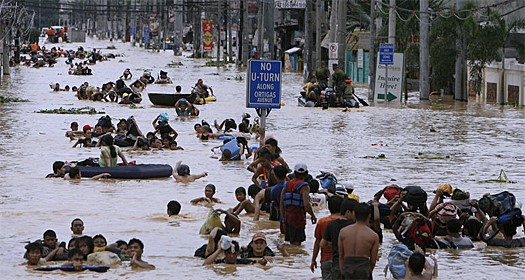
7. “Climate adaptation climbs the priority list:” the impact of natural disasters widened in 2018, with wildfires and inland flooding joining superstorms in exposing infrastructure shortfalls across the world. This is not yet translating into significant additional capital outlays (as opposed to repair and recovery costs), but the former is only a matter of time.

One prediction — “More of the Same for Less,” on continued declines in the prices of wind and solar energy – was directionally on target, but didn’t get quite as far as we predicted. We expected to see the first ever solar tariff below two cents a kilowatt hour ($0.02/KwH), and the lowest new tariff came in at about $0.023/KwH (in Dubai). That’s still less than a 1/3 of the cost of electricity from the average new greenfield coal-fired plant. The two predictions which didn’t materialize in 2018? A major increase in re-powering and abrogation of PPAs in the power sector, and less stability in infrastructure assets. Look for those in the 2019 predictions…

The last few years have seen unprecedented change in infrastructure markets (related columns here and here, among others). That’s been mostly good news, given how long addressing infrastructure gaps has been at the top of government agendas, and how little change there seemed to be for decades. That change, however, has not materialized in the way that traditional infrastructure experts might have expected. Infrastructure Ideas has covered extensively how new technologies in particular have changed delivery mechanisms and costs for several infrastructure services. Yet the 7 (or 7 ½) out of 10 accuracy registered in our 2018 predictions also implies that while different than traditional infrastructure models, the changes unfolding across infrastructure are creating trends which can be relatively well forecast. This is good news for infrastructure investors, for whom change means opportunities, but for whom unpredictable change also means intolerable risk levels. And all these trends will continue to be in the news, and covered by Infrastructure Ideas, as we go forward.

Coming up next: our ten infrastructure predictions for 2019.

Santa Amazon is Coming to Town

Santa (Amazon) is coming to Town

You better watch out
You better not cry
Better not pout
I’m telling you why
Santa Claus is coming to town
He’s making a list
He’s checking it twice;
He’s gonna find out who’s naughty or nice
Santa Claus is coming to town

Wait, it’s not Santa Claus… No, no, not Santa at all. Even better! It’s Amazon!

Santa Amazon is coming to town
He’s making a list
He’s checking it twice;
He’s gonna find out who’s naughty or nice
Santa Amazon is coming to town

For residents of Queens, New York, and Arlington, Virginia (home of Infrastructure Ideas), Santa Claus came a little early this year. After a year-long search process that gathered widespread headlines, Amazon, one of the largest companies in the world with a market cap not far under $1 trillion (yes that’s a big number — fewer than twenty countries have a GDP of $1 trillion), announced that its second headquarters would be split between New York City and Arlington. Each of the two cities is expected to receive, as a result, some 25,000 new jobs and at least $2.5 billion in new investment.

Now, not everyone in New York or Arlington is necessarily thrilled, and the incentive packages offered to Amazon to choose one location or another have been criticized in many places. But still it’s a pretty big deal, and in Northern Virginia at least the announcement received positive marks — of around 75% according to opinion polls. In Arlington the disruptions stemming from Amazon’s arrival sound manageable, given the already strong and growing tech talent pool in the city and a large amount of new office space. Amazon does not intend to build new construction for probably another 6-7 years, and to mostly utilize existing space. And announced plans are heavy on walkability and connections to existing mass transit infrastructure.

Why write about this in Infrastructure Ideas? There is one less obvious aspect of what’s happened in this search process that is of particular interest to the infrastructure community, and on which we’ll focus here. This develops the theme articulated in Nick Tabor’s “Intelligencer” column, published in early December by New York Magazine. The column’s title is “Amazon is an Infrastructure Company.”

This interesting twist should give infrastructure planners, operators and investors pause. Let’s unpack the story a bit. The fuller title to Tabor’s column is “Amazon Is an Infrastructure Company. The HQ2 Bids were Reconnaissance.” Tabor notes how much information was acquired by Amazon in the course of receiving bids to host their second headquarters, and in all likelihood how this information will be far more valuable to the company than the explicit incentives offered by various locations. He also notes how Amazon is evolving rapidly from a pure retail company – its origin and still how the world sees it – into a company specializing in infrastructure. Amazon now has one of the largest logistics operations in the world, with more than 250 warehouses, an integrated shipping operation with its own vans and drivers (not to mention its alliances with traditional shippers), and a cloud-computing service. It is expanding the warehouse network rapidly, has floated a plan to open 3,000 stores – automated, no cashiers – within three years, is building its own air-cargo hub and leasing a fleet of branded planes.

Looked at from this angle, Amazon can indeed be thought of as a logistics or transportation company. Probably one of the largest in the United States already. And unlike most American logistics companies, it is already international. For infrastructure planners, the idea of attracting an Amazon facility because of job creation is… fine. But its impact as a logistics provider is arguably much higher. State and local planners, or national planners in different countries, should be thinking about partnerships with an Amazon first and foremost for its logistics expertise, capabilities, and likely investment. Amazon’s business model, where it wants to be in the middle of online sales from virtually everyone to everyone, should incline it to listen favorably to proposals aiming to create shared benefits between it (in terms of faster deliveries) and local infrastructure planners – with much of the capital coming from Amazon. Or, capital coming from Amazon and infrastructure financiers: for logistics investments benefitting local economies are often undertaken in the form of Public Private Partnerships (PPPs), and financed through stand-alone entities. A potential opportunity for infrastructure planners and investors (and competition for existing logistics operators).

Its not just Amazon. As the big tech companies keep expanding, Google-Alphabet and Apple and others, infrastructure becomes increasingly important to them. They discover the kinds of infrastructure constraints that more traditional manufacturing and service companies have known for decades. And, unlike smaller companies, and unlike most governments, they have the money to do something about those constraints. Google-Alphabet is already a major investor in new vehicle and energy technologies. In the future, for governments looking for partners to help address long-standing infrastructure issues, Santa Claus may be coming to town in a big red technology suit.

Ho Ho Ho !

——- * ——

That’s it from us for 2018. Looking ahead to 2019 in the spirit of the season, expect your gifts from Infrastructure Ideas to include:
• A look back at 2018 and 10 predictions for 2019
• Some good news on climate (really, there is some)
• How coal may become the next Big Thing – even for Green Banks
• Continued updates on the changing landscape of mass transit and urban mobility
• More infrastructure disruptions in the air

To all our readers across the globe, we wish you a “Happy Holiday” and a good start to the New Year!

The Silver Line to Dulles: no gold here

Not all that glitters is Silver

“Silver and gold” sounds like an appropriate theme at Holiday time. It’s a theme not limited to listening to Burl Ives singing on the soundtrack to “Rudolph the Red-Nose Reindeer”. Plenty of Silver and Gold have been made on infrastructure around the world, with year-end dividends in investors’ stockings by the fireplace. One place, though, where Silver is definitely not turning to Gold is Washington DC, with the city’s Silver Line metro extension. In this update, we’ll do our best to find some holiday cheer about this important but unpromising piece of infrastructure.

For residents of Washington and Northern Virginia, and even more so for visitors to the Nation’s Capital arriving by air, the Silver Line originally seemed like a very welcome gift, even if overdue. Aimed at connecting by rail Washington’s Dulles Airport to the city and the area’s metro system, extending the (then) highly-regarded Washington Metro subway, the Silver Line’s planning was launched over 15 years ago (rail service to Dulles Airport had been envisaged back in the 1970s, but postponed then to an indefinite date).

For infrastructure planners and investors, the Silver Line is also a big deal. The originally projected costs of the Silver Line amounted to $5.6 billion, $2.7 billion of which for the still under construction Phase II. The project is structured as a PPP, or Public-Private Partnership, with governments providing 51% of costs (the US Government just under $1B, and state and county governments $1.8B), and “users” funding the balance. The “users” funding was unusually structured, with the “users” not being the users of the Silver Line itself (which would normally be classed as “users”), but rather users of the parallel Dulles Toll Road, though toll surcharges running already a decade. These numbers make it one of the United States’ biggest infrastructure projects, and one of the largest PPPs on record.

The first phase of the Line, running from Reston, Virginia, to the existing Orange Line and from there into downtown Washington, was completed at long last and service opened to great fanfare in July 2014. Ridership has been limited and below projections, as many potential users awaited the “imminent” extension of the Silver Line through a Phase II running from Reston to the airport – and now beyond Dulles Airport to stations in Ashburn and “Cloud City,” where many internet servers have located. At the Phase I service launch, sometime early calendar year 2018 was announced as the “end of the line,” and the long-awaited conclusion of the complete Silver Line’s construction. For those who have flown into Washington, waited for immigration and customs lines and baggage, only to stand in long lines waiting for taxis from Dulles at peak times, the Silver Line could not come too soon.

Only it’s not coming soon. Already 13 months behind schedule, the Silver Line announced this month… yet another problem.

In 2015, not long after Phase I started operation and there was still optimism about the whole project, the Silver Line experienced its first major setback. Cracks were found on girders supporting tracks near the airport… which had not even been used yet! Not a good start. Then in early 2018, the next major problem arose: this time the issue was substandard quality of concrete being used at the new stations. Replacement generated more costs and delays, and embarrassment which continues, with last month a subcontractor accused of faking records having been sentenced to prison. And now the latest problem: it appears that hundreds of concrete ties being used for the rail line are flawed. The ties have been discovered to be thicker in the middle than on the ends, creating potential for imbalances in train cars passing over them. Again not good. Even worse, the problem has reportedly been known for several months, and there seems to not yet be any agreed solution. So, no Phase II opening in 2018, and now probably not in 2019 either, or maybe not even 2020….

Cost increases associated with the first year of delay in Phase II were announced as being $100 million, and will certainly be far higher than this before construction is complete. No revised funding plan has been publicly announced.

This news is not only bad for Washington area commuters and airport arrivals. For backers around the world of metrorail systems, of mass transit, and of transport PPPs, this is grim news. The Silver Line has been a flagship project not just in the DC area, but nationwide, and globally among subway projects. Its travails will have a chilling effect on planners, voters, and infrastructure financiers.

What lessons can be drawn here? The already obvious lesson is that rail systems are difficult to build. Subways are notoriously prone to delays and major cost overruns, and in that sense the Washington Silver Line’s problems are not “new.” Yet the implications now may be bigger. As Infrastructure Ideas has previously discussed, we are now in an era where new urban transport technologies are emerging, posing new opportunities for users and new questions for infrastructure planners. And while many of the new transport modes benefit from rapidly declining costs of technology, traditional rail transport does not. Laying down concrete and steel comes with the same kind of risks that it has, well for over a century, and there are no fundamental changes on the horizon there. So relative to new options, rail is getting more expensive for users and financiers, and also looking much riskier for planners. It is an analogous situation to the transformation we have been seeing for several years now in energy infrastructure, where traditional modes of generating electricity (oil& gas, coal and hydropower) are getting progressively more and more expensive relative to new modes (wind and solar) which benefit from plunging technology costs.

A second lesson doesn’t look so obvious, yet it is nevertheless. And this is that, with all the Silver Line’s problems, potential users continue to wait for it. A recent Washington Post review of the first full year of congestion pricing (also covered by Infrastructure Ideas) on Interstate 66, from Northern Virginia into Washington, noted that with frequent peak time $20-30 one-way tolls, many drivers still eagerly await better mass transit options to go from Fairfax and Loudoun counties into Washington. Which points to the underlying situation faced by Washington, and by so many cities across the globe: urban populations continue to grow and more people continue to need to get into cities and around them. And congestion on roads keeps getting worse. The demand for transport infrastructure continues to grow, whatever the problems encountered by infrastructure projects.

A third lesson is that the mix of mass transit approaches to urban transportation is likely to keep changing. The Washington Silver Line’s problems probably reflect fairly accurately what many planners see when they look at urban rail: potential to move large numbers of people, but high risks of major delays and cost overruns. Already we can see across Emerging Markets that planners are tilting much more heavily towards BRT and bus-based systems than rail. This tilt will continue. And we can project that several new features will start appearing more regularly: deployment of new EV, and in some case AV technologies (especially electric buses); initiatives to connect more consistently to last-mile technology systems such as e-scooters and bike-share networks; and alliances with ride-share companies such as Uber and Lyft. Infrastructure Ideas will delve further into the implications of this evolution in upcoming columns. Rail systems will not go away. But stand-alone, traditional subway systems, ignoring new technologies and competing/ complementary transport options – as the Silver Line largely was– are increasingly a thing of the past.

Lest this gloomy Silver Line update make our readers think of Infrastructure Ideas as a Grinch, we’ll end the year soon on a more upbeat note, with a Holiday column on Santa Claus and the world’s (future) biggest infrastructure company.

Macron’s Yellow Vests

Macron’s Yellow Vests: Implications

Paris tourists had a bad last week, and it’s not the early December weather. The “gilets jaunes,” or “yellow vests,” have given a new meaning to “climate change driven storm,” with their protests leading to cars burning in the streets and monuments closing in France’s capital. For those who have not been following the headlines, large numbers of street protesters in Paris (and elsewhere in France) wearing yellow vests (used in France to signal one’s car has broken down) have been protesting proposed tax hikes for diesel and gasoline, intended to pay for climate change initiatives. President Macron has now withdrawn the proposed hikes, but the protests have morphed into broader demonstrations against Macron, and turned violent.

Paris protestsThese protests, and the abandonment of the policies which triggered them, have some obvious implications now being widely covered in the press. Beyond this press coverage, for infrastructure, there are also some longer-range implications worth noting: less international cooperation on climate, growing pressure for climate action, eventually higher risk of large, abrupt policy changes, a new direction for climate funding, and higher projected needs for investment in climate adaptation infrastructure.
Starting with the more obvious implications, aside from tear-gas not fitting tourists’ images about the romantic air of Paris. First Macron, clearly, is in trouble. The protests would not have mushroomed had it not been for his low popularity, and the introduction of the “climate taxes” he proposed followed the script which has been a big factor in his plummeting support: lack of consultations before announcing policies, and lack of any apparent understanding of potential adverse consequences or reactions. He has yet to show that he can learn from these reactions. Second, this is not good for the broader “progressive” politics of which Macron had become a champion in the West, and opens more political space for nationalist and populist movements across Europe. Third, for climate-related policy action, it also doesn’t look good (Donald Trump’s twitter account was positively gloating on the riots). As Brett Stephens framed it in the New York Times (“France’s Combustible Climate Politics”), an inviting way to look at the Paris protests is that “perhaps the only thing worse than doing nothing about climate, politically speaking, is doing something about it.” It’s not like the “yellow vests” are extremist reactionaries, in some kind of denial about science, or worried about their shares in oil and coal stocks – they’re for the most part working-class, and seem to enjoy widespread support among the French public. Stephens’ excellent article goes on to make the important larger point that this is not about politicians being afraid to enact policies to combat climate change, but rather about failing to come up with good and/or well-executed policies – and that this is getting to be a distressing pattern. He lists several policy attempts that have failed to gather support, or to achieve intended climate objectives: the 95-0 US Senate rejection of the Kyoto Protocol, biofuel subsidies, the apparent failure of 95% of the signatories to stay on target for their Paris Accord goals, reducing coal emissions in China and India, and carbon sequestration.

It’s a sobering list.

But let’s leave those points where they are, and move beyond the current press coverage and look at some less obvious implications.

Yes, a weaker Macron means less political leadership, and the “gilet jaune” experience will give pause to other governments thinking of political actions to slow climate change. Yet as Infrastructure Ideas and others have been increasingly noting, renewable energy at least will continue to increase, driven more by economics than by politics. Wind and solar generation costs have dropped below those of new thermal generation in the majority of places already, and plummeting energy storage costs are beginning to make renewables plus batteries a low-cost solution. Technology is on a one-way track here, with more carbon-intensive electricity becoming more expensive, rather than cheaper, compared to renewable energy (if anything, what political action is needed to save is expensive coal and oil-fired generation, as we’re seeing on the part of the Trump administration in the US). So what are some of the more important lessons from Paris, for climate change mitigation?

1. When people are affected by policy, consultation matters – a lot. This is an old, old lesson. Infrastructure practitioners have known this for decades. Consultations with affected people has long been a hallmark of approving financing for infrastructure, especially since the advent of the Equator Principles in 2004, led by the International Finance Corporation (IFC). Macron’s government missed this lesson entirely, and the absence of consultation was a major factor in the popular reaction, and in the government’s being caught by surprise by the reaction. Governments looking to take action against climate change will need to find ways to get their people on board with policies.
2. We can expect to see less international cooperation on climate in the near term. The climate denial position of the US administration has made it this difficult already for some time, but the weakening of Macron will make it more difficult. The first days of the ongoing COP24 meeting have already seen US-led attempts to deny the science under discussion. A broad trend in Europe, interrupted by Macron’s election in France, has been the rise of nationalist parties, and most of these have positions on Climate Change similar to the Trump administration’s “America First” platform: Climate Change doesn’t exist, or it may exist but you can’t trust those trying to lecture you on how to act about it, or it may exist but it’s less important than [fill in the blank – immigration, jobs, etc…]. Pessimists are pretty safe with their predictions in the near term.
3. More political pressure will come. Nature is not terribly interested in politics, and recent reports (see Infrastructure Ideas’ post “The Climate Apocalypse Reports”) make it clear that ongoing news will only show climate prospects getting worse and worse. It is predictable that at some not too distant stage, the impacts of climate change on people and countries to “do something” will get overwhelming. Only now it will somewhat later rather than somewhat sooner, and because of that the urgency to act will be more immediate.
4. When enough momentum to act builds, policy changes will be much more abrupt than would have otherwise been the case. With less international cooperation, more nationalist governments uninterested in climate policy, and denialism in the US and elsewhere, the world is likely to get hotter sooner. A “technology fairy” may appear to make it all go away, but in spite of the remarkable advances on wind, solar, and energy storage (among others), current technology trends still leave the world on an emissions curve which will make most coastal cities disappear under water. And as is true for most processes, the longer you wait the more you have to do in a shorter time. Therefore another implication is that “stranded assets” scenarios for hydrocarbons may become likelier as time goes by: the longer it takes for greenhouse gas emissions to come down, the more aggressive the policies needed later will have to be. And the higher the switching costs involved will be.
5. Money may start going to unexpected places. In many countries, politicians seem to be behind economics – and still arguing for public money to subsidize renewal energy. Even Macron was still intending to use the proceeds from the now-abandoned fuel taxes for renewables. What we can predict, instead, is that the relative value of taking out existing high-emission sources will become greater than the value of subsidizing new technologies. Renewables need less and less help to be cheaper, and if anything we see in some countries government efforts to invest directly in renewables actually being a hindrance to further price reductions. It is easy to imagine that soon renewables will account for the vast majority of new electricity capacity: they already do for about half globally. The world’s problem will increasingly be with existing, rather than new, facilities. The economic case for replacing existing capacity is far more difficult than the one for choosing renewables over thermal sources for new capacity. We can therefore expect – in the not too distant future — growing public interest in subsidizing exits of existing coal and oil-fired capacity (and in due course, natural gas). Watch for future columns on this topic.

Finally, an implication for climate adaptation infrastructure. That’s an easy one. The longer it takes to reduce emissions, the more investment will be needed for climate adaptation… For that, we’ll be able to thank Emmanuel Macron, and his yellow vests.

The Key to Understanding Infrastructure: Astérix

Everything I Know About Infrastructure I Learned from … Astérix

Astérix is a familiar and revered figure for the French and Francophiles everywhere. Especially those who grew up in the 1960s and 1970s, the heyday of the “original” Astérix comic books written by René Goscinny and illustrated by Albert Uderzo, will likely have read every book multiple times. The franchise lost some of its momentum after the death of Goscinny in 1977 and the publication of the last co-produced story, Astérix and the Belgians, with Uderzo subsequently distinctly less successful at playing both illustrator and writer roles together. The series languished for several decades, but has now been relaunched under the new team of Jean-Yves Ferri and Didier Conrad, whose first joint effort, Astérix chez les Pictes (the Scots) came out to great fanfare in 2013. Ferri (the writer) and Conrad (the illustrator)’s latest publication in the series, Astérix et la Transitalique, has been available in France since late 2017. Titled Astérix and the Chariot Race in the English-language version, the book is not only full of the wonderful humor of the early Astérixes, but also turns out to be an excellent primer for those wanting an overview of infrastructure issues – both in the days of Ancient Rome and today. At least transport infrastructure.

Let’s have a look at the story, and compare it to infrastructure conversations.

The story begins with displays of the frequency and severity of potholes (charmingly called “hens’ nests” in French) in Roman roads, and an accusation in the Roman Senate against the equivalent of the Transportation Secretary, for diversion and personal use of funds intended for road maintenance. Clearly an unprecedented possibility – one wonders where the authors came up with such an idea. The official in charge responds in a thoroughly modern way, insisting that the media is spreading “false facts,” and that Roman roads are in fact excellent! To distract from too-close scrutiny of his own claim, he comes up with a distraction – the roads are so good in fact, he claims, that there will be a peninsula-long chariot race where people of all the known world will be invited to see the excellent quality of the roads for themselves – this being the “Transitalique” of the title. With the competition being now all the rage in the press, the agenda has moved on and those looking for improved infrastructure are regrettably left behind.

After Astérix and Obelix sign up to represent Gaul in the competition, the story moves on with the announcement that the race will be a Public-Private Partnership (who says PPPs are a modern invention?), with a big food company (whose Chairman looks suspiciously like Silvio Berlusconi) financing and sponsoring the event in exchange for their logo being prominently displayed. The race kicks off in Modena, home of today’s Italian Formula One Grand Prix, though the fictional competition itself is modeled more on the Giro d’Italia.

As the opening stages of the event go by, we and the Gauls discover that the race has been rigged in favor of the home side. Shock and horror! Maybe some cyclists were consulted… A wrong turn takes the riders to the lagoon of Venice, where the water levels are already rising amid fears of Imperial Climate Change. Of course not every reference is infrastructure-related, as the Gauls are treated to Parma Ham, Chianti wine, a glimpse of the Mona Lisa, and a singing innkeeper who looks for all the world like an uncannily close ancestor of Luciano Pavarotti. There are even members of a local community, feeling their views are being disrespected, threatening the infrastructure that passes near them. To avoid being cavalierly too realistic, the authors have the Scandinavian team complaining about the excessive efficiency of Italian roads. At the end (since the Astérix stories, for all their realism, are sadly only fiction…), the good guys triumph – with the cheating home side falling prey just before the finish line to – of course – yet another unfixed pothole. The Gauls go home to the traditional end-of-story feast, the race’s spectators are happy over a good show and in the end, Caesar is happy because the spectators are happy, and no one talks about investing in infrastructure anymore.

Potholes, corruption, mismanagement, PPPs, political interference and climate change. It has to be said: the Astérix crowd knows infrastructure!

The Climate Apocalypse Reports

The Climate Apocalypse Reports

Just-ended November 2018 saw the issuance of a spate of major reports on Climate Change, all of them with very bad news. Bad news unless you take the same point of view as that expressed by the US President, that you know better and climate change is not worth believing. For the non-conspiracy theorists out there, this is a lot of information, and a lot to on which to chew. The Intergovernmental Panel on Climate Change (IPCC) released its 15th annual assessment at the end of October, the US Government put out its 4th Annual Climate Assessment on November 23 (the day after Thanksgiving, when the US administration hoped fewer people would read it…), and the World Meteorological Organization released its annual review of global temperature data on November 29. And on November 28, to somewhat lesser fanfare, The Lancet, a UK medical journal, issued a major report on the expected health impacts of climate change. Climate Apocalypse is a good term for summarizing the various future projected in these reports.

This post will look at some infrastructure-related adaptations we can also expect, in the wake of the climate changes being both experienced and projected. The bottom line for infrastructure from all this? More spending.

Two areas where we can expect a major uptick in infrastructure investment are flood management, and energy sector resiliency.

Flooding risk is already a visible consequence of climate change, especially from increased high-precipitation events, as previously covered in Infrastructure Ideas. Breathless news coverage of hurricanes and typhoons has increasingly focused on this effect, as opposed to wind damage. What is “new”, or at least getting more emphasis, in these recent reports, is that flood-related damage and related infrastructure implications are much more widespread than commonly thought. The big message: it’s not just the coasts.

Another new report, by researchers at the University of Maryland and Texas A&M, “The Growing Threat of Urban Flooding,” was released in the last week of November. Well summarized in a piece by Henry Grabar at Slate, this report synthesizes the surprisingly limited body of knowledge on urban flooding. The report points out that the US has been seeing a wave of urban flooding problems, and by no means all related to highly publicized hurricanes and tropical storms. It notes that the US has experienced nearly 150 urban flooding events a year, or almost one every two days, and that 2 in 3 flood insurance claims come not from storm surges but rather from freshwater. Increased flood damage is coming from a combination of factors which is present, well, everywhere – not just in the US. The growth of cities has eliminated many natural drainage areas, while channeling storm run-off in new – and essentially unplanned – ways. Climate change has increased the frequency and severity of extreme rainfall events, concentrated in places well away from typical tropical storm landfall areas. And water and sewer infrastructure is in many places either old, undermaintained or non-existent.

The costs for repairing infrastructure damaged by these flooding events, or for repairing infrastructure to contain envisaged future events, or for building additional infrastructure only now seen as necessary in light of these new flooding patterns, are high. Cities across the country are having to confront higher infrastructure spending costs – with dwindling support from the Federal Government (see previous Infrastructure Ideas post on US infrastructure spending patterns). This need for additional, climate-change related investment in water and sewer infrastructure, is going to become increasingly visible in the coming years. And it’s far from being just an American problem: the issue is beginning to be covered first in the US, but the same underlying factors apply across all countries. Water and sewer investment is going to become more important everywhere.

Still in late November, another Wood Mackenzie piece reviewing the USG climate report covered parallel climate change impacts on inland power utilities (Emma Foehringer Merchant, November 26). The piece highlighted the same message – it’s not just the coasts. It noted that inland energy infrastructure “in every region” will be hit with extreme precipitation, while in some areas the kind of conditions that have led to the high-visibility drought and wildfires in California will become more and more present. Utilities will have to deal with increased repair and maintenance costs related to flood and fire, while also facing a combination of lower power supply (from lower weather-related transmission efficiencies and thermal generation) and higher demand for cooling. Hydropower supplies are also being affected in many places: the USG Climate Report observes that California’s hydropower generation dropped 59% in 2015 during the unprecedented multi-year drought in the state. Not to minimize the issues facing coastal utilities: the report notes that restoring Puerto Rico’s grid is expected to have a $17 billion price tag, while Consolidated Edison and PSE&G spent $2 billion in grid-hardening after Hurricane Sandy.

Warnings help. This is an Apocalypse where planning makes a big difference. Infrastructure costs are always higher when the spending is unplanned and difficult to manage. And costs of preventative action are generally a fraction of later repair costs. Several cities and utilities are planning ahead, and investing in resilience. Those investments are unlikely to eliminate future flooding and other climate change-related problems, but they could make them substantially less expensive.

For infrastructure planners, infrastructure companies, and infrastructure funders, the Apocalypse message is simple. The future will be expensive. We can all expect to see the growing importance of climate adaptation in future infrastructure investment.

Urban flooding

Germany and China: More Betting on Batteries

More betting on batteries: Germany and China

Billion-Euro Package Mobilizes German Battery Sector” was the headline of a recent piece of infrastructure analysis by Wood Mackenzie.

It is not surprising to hear that Germany would be at the forefront of a new emerging technology, something that Germany has managed to do again and again for decades – especially in any kind of automobile-related technology. Earlier in November the Ministry of Economy announced a Euro 1 billion fund for battery cell development – covering both automotive and energy-sector applications. The European Commission’s analysis says the battery sector will be worth nearly $300 billion a year by 2025, according to Reuters. Germany wants to be the big European player in this market, and draw in the jobs that should be associated with the manufacturing side of the market. The first of multiple expected partnerships drawing on the fund involves German battery maker Varta and the Fraunhofer Institute. Varta hopes to use the funding to expand its production from large energy storage systems at one end, and small hearing aids at the other, into batteries for electric cars. The article notes that BASF, Ford-Werke, and Volkswagen all may also tap into the fund as they seek to expand their presence in the market. So, good for Germany: as Infrastructure Ideas and many others have been signaling, energy storage is already and will continue to be one of infrastructure’s fastest-growing segments for decades to come.

Sounds good. There is, however, a problem. The second part of the headline above goes on with: “But analysts warn the money is nothing compared to Asia’s battery war chest.” Too little, too late, is the risk. A Wood Mackenzie analyst notes that while it is great that German battery companies are looking to move forward, the issue is that all big German car manufacturers are already using batteries, and those batteries are coming from Asia, from China, Japan or Korea. $1 billion sounds great, to help kick-start German battery manufacturing, but it is peanuts compared to what Asian players are already investing in the sector. And almost all of their investment is going into China. CATL (Contemporary Amperex Technology Co. Limited) has been the big player in China, though recently BYD – the market leader in electric buses – announced they would build the largest EV battery plant in China for $1.5B, while Korea’s LG Chem announced a similarly-sized new plant investment, also in China. These are big investments. Between them the two new plants should have capacity to build 67 GWH of battery capacity annually. In fact, the biggest announced plans for making batteries in Germany itself is not from Germany but from… China. CATL has said they will invest $280 million for a plant supplying BMW. And in the background, three Chinese EV raised just under $2 billion between them in the last quarter – NIO, Guangzhou Xiaopeng Motors, and Zhejiang Dianka Automobile.

What to take away from this? The energy-storage business continues to grow at tremendous rates. Whether manufacturers are targeting automakers or electric generators and grids, a ton of money is going into expanding battery-making capacity. And that rapid growth in volume is directly driving continued rapid cost declines. Energy storage systems combined with renewable generation capacity are already in some places cheaper than alternative and traditional means of producing electricity. The time is fast approaching when renewables plus storage will be cheaper than coal-based and natural gas-based power in the majority of grids.

The other geographic take-away? China went from a small player in traditional power systems to a global leader in renewable energy. China has by far the world’s largest markets for both wind and solar generation. And several Chinese firms rank in the top 10 of global suppliers of wind turbines and solar cells. Now as the energy storage business grows in volume and in relative importance within infrastructure, expect China’s market, and Chinese firms, to be even more dominant players here. In electric vehicles, it’s too early to tell whether China’s lead in batteries will translate into a large share of global EV car manufacturing or not. It’s not too early, however, to see that China will be a global leader, if not the global leader, in EV bus manufacturing.

Still, good for Germany. It would be unimaginable for Germany to be absent in one of the fastest-growing, engineering-intensive segments of infrastructure, and the new incentive plan will help. And let’s not give up by any means on the several strong US players in this business too. China’s volume leadership in energy storage, in aggregate, may be unassailable, but the battery business is also materially different than that of renewable power generation. There is much greater diversification in the possible applications of energy storage systems, and this is a business which will have more important sub-segments than the more monolithic wind and solar businesses have.

Let the race continue! And may all users win.

Hurricane Recovery Lessons

Hurricane Recovery Lessons

The Summer and Fall of 2018 have been full of headlines on natural disasters: wildfires in California, record-setting hurricanes and super-typhoons in both the Atlantic and Pacific. All indications are that we can expect more of all of this in the future, as a number of climate change forecasts have underlined in the past month. Among their many effects, these natural disasters have a big impact on infrastructure. Being ready for when disaster hits will become a much bigger part of the job for infrastructure planners in coming decades. In this post, Infrastructure Ideas looks at some recovery lessons centered on Hurricane Maria.

On September 20, 2017, Hurricane Maria came ashore in Puerto Rico. A Category 4 storm with 155 mph winds, Maria was the strongest hurricane to hit the US Island territory in 80 years. It also arrived only two weeks after Hurricane Irma passed just north of the island, already causing substantial damage. After Maria, Thousands died, 100% of the island lost electricity, and clean water, health care and food became very scarce. After two months, less than half of the island had its electricity restored, and for some it has yet to be put back in place. In the next year 200,000 people, or almost 7% of the island’s population, left Puerto Rico for the US mainland.

Hurricanes Florence and Michael in the Atlantic, Super-Typhoon Mangkhut in the Pacific, as well as the July 2018 mudslide-causing rains over Japan have all been major casualty and damage producers in the twelve months since Maria devastated Puerto Rico. 2019 and beyond will certainly bring more such storms. How can countries or regions plan ahead to mitigate some of the risks to life and property associated with these disasters? The last year in Puerto Rico brings some valuable insights, especially in the area of infrastructure.

While some aspects of the recovery in Puerto Rico have been highly publicized and visible (Chef Jose Andres bringing in planeloads of food supplies), or politicized (comments that the death toll was as low as a few dozen people, or how effective the US Government’s efforts were), some less visible infrastructure recovery efforts in Puerto Rico contain useful factual lessons for those planning for potential similar disasters in other locations. In particular, Puerto Rico’s experience highlights important aspects of resiliency strategies for electricity systems.

For followers of the growing importance of renewable energy and electricity storage across the world, it will come as no surprise that utilizing these new technologies is central to hurricane-affected Puerto Rico’s resiliency plans. Key elements of interest include:

• Installation to date of over 10,000 solar and storage systems for health and other important local facilities: hospitals, medical clinics, schools, community centers, residential neighborhoods, and local businesses. As a result of this effort, the island territory now has a larger number of solar-plus-storage systems in place than any state on the US mainland.
• Beyond the existing installations, the draft “Puerto Rico Disaster Recovery Action Plan” calls for a $400 million incentive program for more solar-plus-storage systems, along with resilient water systems, for lower-income households and neighborhoods.
• The same Disaster Recovery Action Plan calls for a $75m program for “Community Resilience Centers”. This would support the building or rebuilding of areas which would serve both as year-round community centers and as emergency safety gathering points.
• And the Plan also calls for a $100 million revolving loan fund which would be available for infrastructure contractors facing credit risks from a natural disaster. This revolving fund could be used to provide liquidity in a crisis to companies which have the skills and assets to help recovery, but which in practice find themselves unable to respond because of the impact of the disaster on their financial condition. This has the positive aspects of using public funds to leverage private-sector capabilities and assets, and using potentially external aid to leverage local resources, rather than waiting for what is in many places a distant and slow-moving government to undertake a complex recovery program on its own.

All of these aspects of Puerto Rico’s post-Maria reconstruction and resiliency planning are of use to islands and coastal areas potentially affected by hurricanes and other major storms. There are a host of other lessons being drawn from these hurricanes, including the importance of response speed, the role of mobile-phone message alerts, how long housing recovery takes, and of course that resiliency-focused planning dramatically reduces losses.

The frequency and intensity of such storms has been visibly growing over the past decade, and is widely forecast to keep increasing as climate change advances. Sound infrastructure planning can have a major positive impact on post-disaster health services, commercial and residential recovery, and human and economic losses. This kind of “Climate Adaptation” financing can be expected to loom larger in infrastructure budgets as time goes by. And we can expect that current themes in infrastructure finance, including how to better leverage private sector capital and capabilities, will play a large role in climate adaptation.

Big News from Asia: Japan inches away from coal

Big News from Asia: Japan inches away from coal

As first climate concerns, and now increasingly economics, drive the power generation choices of more and more countries towards renewables and natural gas, and away from coal, Asia has become the outlier. Asia today accounts for half of the world’s coal consumption, and more than ¾ of all new coal-fired generation capacity is being built in the region. Japan is a big factor in this. Japan is the world’s largest importer of coal, accounting for about 20% of global coal imports, and Japanese companies and banks are the largest players in the coal-fired power business in many countries across Asia and Africa.

A new announcement in September, by Marubeni, may signal a significant change in direction. Marubeni, one of the world’s largest installers, owners and operators of coal-fired power plants, announced that it would no longer support new coal-fired generation. The announcement, framed in terms of climate risks to the corporation’s business and shareholders, states that Marubeni will begin the process of pulling out of coal-fired power generation with a target to halve its coal-fired power capacity by 2030.

Marubeni is large enough for this to have a major impact on its own. Marubeni currently owns about 12 Gigawatts of electricity generation capacity, of which about 11 GW running on fossil fuels, mainly coal. 95% of this capacity is outside of Japan. The new policy announcement immediately puts at risk a number of high-visibility coal projects under design or construction in Emerging Markets. These include the proposed 300 MW Morupule B project in Botswana, the 1.2 GW Thabametsi power plant in South Africa, the also 1.2 GW Nghi Son 2 project in Vietnam, and the 400 MW Pagbilao extension project in the Philippines, and possibly the 1 GW planned expansion of the Cirebon project in Indonesia. These projects represent capital costs of close to $10 billion in aggregate.

Beyond Marubeni, one can expect this move to have wider repercussions. Mitsui and Sumitomo, two of Marubeni’s big rivals, and themselves major players in the global coal market, have not gone as far as Marubeni but have both made announcements of plans to sharply raise the share of renewable energy in their business, and reduce their coal portfolios. Even the Foreign Ministry of Japan earlier this year began to criticize the country’s support for coal-generation around the world. This was followed by a report from an energy task force report stating that the country’s competitiveness was being harmed by its approach to energy.

Beyond operation, construction and sponsorship, the few lower-income countries still looking for external support in building additional coal-based electricity capacity also rely heavily on Japanese financing. Most international financial institutions have ceased supporting new coal plants, and Japanese financiers are one of the biggest remaining sources of support. In May and July of this year, two major life insurance companies, Dai-Ichi Life Insurance and Nippon Life Insurance, became the first two Japanese financial institutions to announce they would no longer finance new coal generation capacity. Leading Japanese bank Sumitomo has signaled it is reviewing its related policies, and a move by one of the big Japanese banks would be highly likely to be followed by others.

Marubeni is only one company, but its announcement is an indicator of wider movements across the spectrum of players in Japan’s energy business. These movements are a big deal for countries still planning on building new coal plants. Reduced Japanese involvement will make new coal-fired generation more expensive, more difficult to finance, and less likely to be implemented. That’s a big deal.

Solar’s Big Failure

“The world’s biggest solar project has failed.”

Eye-catching headline! And true. But not a surprise.

The March 2018 announcement had been widely touted, for many reasons: Softbank, teaming up with the Public Investment Fund of Saudi Arabia, announced they would build “the world’s biggest solar project:” a 200-gigawatt, $200 billion solar energy generation plant in Saudi Arabia. Here we were, in a country which is the emblem of the petroleum age, with the largest oil reserves in the world, and the government was going point its energy future up towards the sun, not down under the ground. And 200-gigawatts, for those to whom the numbers aren’t immediately meaningful – that’s 200 times the size of a large coal generation plant, and 1000 times larger than the average-sized solar generation facility only a few years back. Wow!

But it didn’t work.

In late September, the project was canceled (with much less fanfare than the original announcement). What happened? Is large solar losing its charm?

What happened was… something that happens in many countries, and many infrastructure programs. It’s a problem that happens way too often. And it’s a problem that has nothing to do with the advantages of solar energy. We call it “announcement-itis.” It’s a problem anyone working with governments, large companies and large financial institutions will recognize in a heartbeat: someone at the top of a food chain will demand that they want a big announcement, and they want it now. It might be about a big conference coming up, or domestic politics, or just about their wanting to look good at the next round of dinners and cocktail parties. Someone wanting to look good to the boss follows through, and voila, announcement! Inconveniences like planning, detailed review, and practicalities? Someone else’s problem.

When Softbank and the Saudi PIF made their big announcement, in the storm of publicity a couple of things were immediately clear: one, 200 GW of intermittent power is a major technical challenge for an electricity grid. Especially when the entire national grid is about ¼ of the size (the generation capacity of the entire country of Saudi Arabia is about 55 GW) … And two, this was no orderly, thought-through tender, but instead a sole-source procurement, completely outside ongoing power sector development plans.

Today, many people are disappointed. Certainly, the heads of Softbank and Saudi PIF are unhappy, having to eat some crow as the announcement gets walked back. Some who may have seen the headline in terms of a shortcut to faster growth of solar and a faster decline in fossil fuel consumption will have been disappointed. Yet this failure may turn out to be a good thing for Saudi Arabia, and for the growth of solar energy.

The megaproject was clearly agreed independently of Saudi Arabia’s pre-existing solar tender program, a program managed by the Saudi Renewable Energy Project Development Office. The program is not off to a very fast start, with only 50 MW of solar PV generation installed to date in the country (that would be one two- thousandth of the capacity of the Softbank project). But the Energy Project office had been doing many of the right things, instilling some confidence in the market through the creation and early implementation of a tender program. Such tender programs have been wildly successful in many countries, beginning with Brazil and South Africa, and perhaps most visibly today India. The first Saudi tender was awarded in 2017 to ACWA Power, one of the Gulf’s blue-chip power companies with an excellent track record. Another tender, for a 400 MW, $500m wind farm, is in process. The program is moving somewhat more slowly than originally announced, and is still lacking an announced broader strategic framework, but it’s clearly along the lines of what has worked very well for many countries. Those countries have gained growing solar generation capacity, increasingly at cheaper prices than power from alternative sources, and gotten get effective, working projects –not just paper announcements.

Bigger is not always better. The silver lining for Saudi Arabia is that the failure may refocus officials on what they already started to build, and what should be successful – an orderly tender program for growing the country’s solar power capacity. And the silver lining for the rest of the world? Maybe the failure is big enough to discourage bigger announcements, at least until underlying realities justify them. And to keep countries focused on growing solar through well-organized tenders which will give them both solar generation and cheaper electricity. Bigger may not be better, but in utility solar, tender is better!