Previous Posts

The Mobility Revolution: Relevance for Policy-Makers

The Mobility Revolution: Relevance for Policy-Makers

The “mobility revolution” – new transport technologies — can bring dramatic benefits to citizens, increasing the ability of people to get around in cities and reducing their cost of doing so. In a time of increasing urbanization and of political pressure to deliver city solutions, the roll out of new technologies which lower costs and increase convenience can be a game-changer. The mobility revolution also has the potential of worsening congestion, reducing fiscal revenues, and creating new safety issues. This column outlines steps which government policy-makers can take to improve the benefits that states and cities derive from the new technologies, and to manage the associated downside risks.

This is the fifth and last column in a set reviewing the fast-changing landscape of transport technologies, “the mobility revolution.” Previous columns in the series have outlined the state of play of these new technologies, and the implications for investors.

What policy-makers?
For starters, this technological disruption has an interesting effect on what part of government makes infrastructure-related policy decisions. One of the striking features of the mobility revolution so far is (pun intended) “who’s driving the bus?” Infrastructure in general, but particularly transport infrastructure, has long had a prevailing culture of “built it, and they will come,” as in Kevin Costner’s Field of Dreams. It has been a culture of long-term planning, driven by public-sector engineering and procurement. The new disruptive mobility technologies have a completely different character. EVs (electric vehicles), AVs (autonomous or self-drive vehicles) and especially shared transport services are being 95%-plus driven by entrepreneurs and private companies. Individual drivers and corporate fleet managers are making the decisions behind the rapid growth in electric car adoption, while tech companies, car manufacturers and corporate fleet managers are doing the planning for driverless vehicles. And as has been the fodder of headlines throughout 2018, cities have awoken to find themselves flooded by bike-shares and electric scooters, or their streets more congested and taxi drivers protesting about ride-sharing. Most recently, the Summer of 2018 has seen the first wave of municipal government push-back on ride-sharing, and the emergence of some of the first policy and regulatory decisions relating to this mobility revolution. The question for transport policy-makers is no longer, “if you build it, will they come,” but rather “when they’ve built it, what will you get out of it?”

There is a second important aspect of the “who is driving the bus” question – especially though not only in emerging markets. It is not only that governments are responding to private sector actions, rather than planning over long periods, but that the governments making policy and regulatory decisions are increasingly local, and not national. The new technologies are almost entirely being deployed in cities (with the exception of some long-haul truck fleets). Authority of municipal governments to make decisions concerning infrastructure is in many cases being contested, notably with a series of pre-emptive legislative actions in the US at the state level seeking to limit the ability of cities to make decisions. In emerging markets, where the decision-making abilities of cities is generally less well-defined, one can foresee a number of challenges.

Upside management
There are four main areas in which governments can improve the upside for the public of the “mobility revolution,” with the caveat that this this is fast-evolving domain and ideas on the best public-policy responses are likely to continue emerging. These five areas for improving benefits include:

1. Encouraging and enabling the roll-out of new technologies
2. Ensuring availability of charging infrastructure for EVs
3. Procuring E-bus fleets
4. Facilitating Multi-modal mobility

The new mobility technologies are spreading rapidly. As for most new technologies which succeed in getting to rapid adoption, it’s because they help people do things which people want to do. Uber and other shared service car models have improved convenience and reduced passenger costs. EVs have had a first phase where they helped people feel good about polluting the environment less and saved on operational costs, and are nearing the second phase where they will save people money across the board. AVs, in a few years beyond that, will save corporate fleets money and improve asset utilization. Now bike-sharing and e-bikes, along with e-scooters, are again improving convenience and reducing costs for shorter distance urban transport, along with improving access to transport services. Reducing transport costs, improving convenience and access are all important public benefits. To date however, outside of China, only shared car services are taking off, and at that in less than 10% of emerging market urban areas. In EVs China is clearly a global leader, and India is taking its first steps to encourage roll-out, but so far that’s about it. For the developing world, the mobility revolution is still a revolution to come. This is a tremendous opportunity for emerging market governments – the technologies that can bring large public benefits are out there, and other governments are doing the trial-and-error of figuring out how to get the best balances of upside and downside. A recent McKinsey report states that cities which deploy smart-mobility applications have the potential to cut commuting times by 15 to 20 percent on average, with the highest benefits for those with the kind of extended commutes most common in emerging markets (McKinsey Global Institute, Smart cities: Digital solutions for a more livable future). But pro-activity is going to be important. Countries and cities will need a good enabling environment to capture these benefits. Municipal governments across developing countries need to educate themselves on what is emerging, on how to encourage technology providers to bring the benefits to their cities, and on how to sensibly regulate providers.

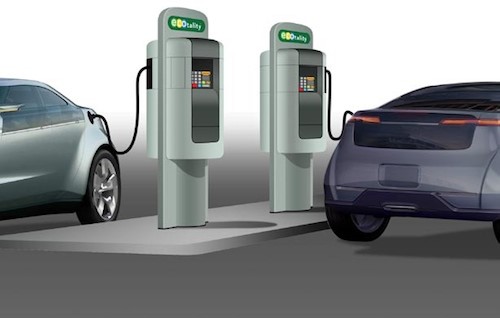
Beyond the enabling environment, two capital-intensive areas are important at this stage: charging infrastructure for EVs, and electric buses. Electric vehicles promise major improvements in local pollution and urban health, with attendant public benefits and appeal to citizens, along with imminent large cost savings. As electric cars rapidly become cheaper (see related infrastructure ideas coverage) than traditional combustion engine cars – in energy consumption, maintenance and up-front costs – making it easier for people to switch to electric cars will become a top policy priority. This will especially be the case in petroleum-importing countries, for which EVs also hold the promise of reduced import bills and improved trade balances. Charging infrastructure is without question the number-one enabler of EV adoption. While different models to deliver charging infrastructure are being tested, it is increasingly likely that commercial models will evolve – implying that EM governments may only need to facilitate the development of this capital-intensive infrastructure, and not pay for it themselves. Electric buses, meanwhile, are projected to become lower-cost than their combustion-engine counterparts even faster than for automobiles. Encouraging bus service providers to shift to electric buses is also likely to become a public policy priority across EM cities. Where new BRT (bus rapid transit) corridors are being putting in place, this will be a particularly attractive opportunity to adopt e-bus technology. As bus service PPP (public-private partnership) models are also becoming more widespread, the convergence of these trends – E-buses, BRTs and PPPs may again enable governments to be able to gain the benefits of new technology through smart procurement and regulation, while largely shifting the associated capital costs to private parties.

The underlying payment and information infrastructure is another important area for policy-makers. As urban transport options rapidly morph from a single, often limited mode of service to multiple potentially complementary modes (bus to metro, bicycle or scooter to bus, etc…), two key features of transport will grow in importance: compatibility of payment mechanisms, and availability of information. Single payments platforms working across transport modes have a huge convenience impact, as do digital signage and mobile apps which deliver real-time information about delays and next arrivals. These two features again represent major opportunities for municipal authorities to ensure that citizens maximize the available upside from the new mobility technologies. Their impact on convenience will greatly affect how the mobility revolution improves access to transport, access to employment opportunities, and urban quality of life. Mayors who make this work well are likely to be highly popular, and conversely the ones who don’t get it right will spend a lot of energy dealing with unhappy voters.

A fifth area at a lower priority now, though to become also very important in time when AVs begin to arrive in emerging markets, will be access to information. AVs are essentially mobile sensor packages, recording information about road conditions, traffic, maintenance needs and so forth – information which can greatly improve the efficiency of local governments’ road maintenance and traffic management efforts. AV providers will not automatically impart this information to governments – having access to this will be an important regulatory priority for municipal authorities – in due course.

Downside management
Along with the above areas for increasing the benefits from new transport technologies, there are four main areas where policy-makers should focus to manage the downsides of the mobility revolution:

1. Urban congestion
2. Safety and other voter concerns
3. Changing revenue patterns
4. Electricity demand

As Uber and other ride-sharing services become more widespread, concerns have grown in many cities over the impact of this new model on traffic congestion. London and other cities have recently commissioned studies indicating significant increases in the number of vehicles on city streets, and reduced average travel speeds associated with this. As ride-share competition proliferates, and average capacity utilization of individual vehicles drops, congestion increases further. Summer 2018 has seen the first moves by some cities in the area of license management (and taxation). New York temporarily halted issuance of new vehicle licenses for ride-sharing services in July. This may increasingly make sense as part of a mobility policy framework in cities. However, as Bruce Schaller pointed out in a recent article on ride-sharing posted on CityLab, it may make more sense for cities to manage and less sense to limit ride services. In a number of cities, ride-sharing is less associated with commute-related congestion, and more with nightlife districts (such as Chicago’s Near North Side and D.C.’s Dupont Circle) where reduced drunk-driving translates into safety improvement. Management tools such as pick-up and drop-off zones (already coming into use in several airports) and reserving bus lanes for mass transit may make sense. Issues are also arising on congestion from bike-sharing and e-scooters. In June, both San Francisco and Santa Monica initiated limitations on the number of e-scooter companies and scooters that could be deployed on their streets. The Santa Monica program, a one-year program with a number of evaluation criteria, is being praised as a potential model partnership agreement, with geofenced parking areas to reduce clutter, agreement on data-sharing, and encouragement for low-income options.

An issue related to traffic congestion is the availability and use of mass transit. Early studies are unsurprisingly suggesting that new mobility technologies are reducing mass transit ridership, at least in US cities. Accounting for this risk in usage and revenue projections for new BRT and metro projects will be important. And a number of sources are pointing to the potential of complementarity between mass transit and the last-mile facilitation of new mobility offerings. How best to do this remains to be worked out, but will clearly be a factor in how much the new technologies worsen – or improve – traffic congestion. A recent column in the Economist argued that cities should co-opt app-based services. Policies and regulations which make this complementarity work will also have a major effect on the equity aspects of the new technologies: while in US cities these technologies have most visibly improved convenience for millennials, in the developing world one would see much higher potential for their improving access and costs of transportation for lower-income urban residents, and those in outlying lower-income areas.

The first pedestrian death from an AV in Arizona earlier this year galvanized concerns with safety related to driverless vehicles. While this part of the mobility revolution may take somewhat longer to reach emerging markets, other resident and voter concerns may come to the fore sooner. The Summer of 2018 has seen increasing concerns in several with the side-effects of new bike-sharing and e-scooter roll-outs. This is particularly the case for “dockless” models, where bikes and scooters are left pretty much anywhere after their use. Here again, early license management can make sense, and emerging market policy-makers will benefit from observing the current trial-and-error period through which such regulations are going.

In many places, a large portion of city revenues come from taxes and fees associated with urban transport: gas taxes, taxi fees, and parking revenues. These revenue sources at a minimum will become less predictable as mobility choices in cities evolve. Taxi usage is negatively impacted pretty much everywhere that ride-sharing has launched, EVs will mean less gasoline consumption, and the combination of ride-sharing services, new bike and scooter options, and eventually AVs (which do not need to park) will reduce parking revenues. Conversely, EV charging infrastructure, licensing policies and appropriate tax policies for shared services are potential new sources of revenues. An agreement on taxing ride-sharing was reached by San Francisco in July 2018, for example. Getting the financial balance to work will be an important challenge for municipal authorities.

Finally, the impact of EVs on electricity demand will be important. McKinsey projects 200 million EVs on the road by 2030, which will significantly reduce gasoline consumption, but increase electricity usage. For countries where electricity supply is a problem, it will increase the priority of making the power sector more effective. Fortunately, this need coincides with the continued sharp decline in the costs of building new power generation capacity, and in electricity costs generally – thanks to the large drops in the cost of solar and wind generation.

For policy-makers, the advent of new transport technologies is a big deal. Lengthy, planning and capital-intensive approaches to addressing urban transportation needs are now joined – and increasingly displaced by, the need to respond to dynamic, fast-changing and private sector-driven and funded innovations. Managed well, this holds out the promise of more satisfied and productive citizens with no increase in public spending. Managed poorly, it can turn into a mess – and short tenures in office.

The Mobility Revolution & Investors (part II)

The Mobility Revolution: Relevance for Infrastructure Investors
Part (B)

This is the third of four columns on the impact of the “mobility revolution.” In our last column, we assessed the significant opportunities for investors in the infrastructure space related to the development of new ride-sharing models. In this column, we assess the opportunities for investors related to electric and self-drive vehicles, and mass transit.

Bottom line: by 2025, the mobility revolution may add $150 billion or more annually to transport-related infrastructure investment opportunities in Emerging Markets. This is over 50% of estimated EM transport related infrastructure investment today. Investors and lenders should be developing their ability to evaluate opportunities and place capital in these areas.

Charging

Electric Vehicles
The rapid growth in electric vehicle usage has received widespread press coverage and will continue to do so. With wind and solar power generation, new technology was initially seen as (a) delivering on a climate-related agenda but (b) more expensive than traditional alternatives, only to progressively become the low-cost option. The same dynamic is now playing out with EVs, with cost convergence between EVs and equivalent internal combustion engine (ICE) models anywhere from 3 to 10 years away. Some press coverage predicts EVs will take much longer to achieve penetration in Emerging Markets than in OECD markets – on the grounds that Emerging Markets are less attuned to climate change issues and that the development of charging infrastructure will be too high a barrier. Infrastructure Ideas believes this to be incorrect – cost advantages for EVs relative to ICEs will in fact be more relevant in lower income markets, and – much as we saw with renewable energy generation – adoption of the new technology will come quickly in most emerging markets.

From an infrastructure investor perspective, it is not EV sales per se that are of most interest, but rather how EVs affect infrastructure. The big impact here will clearly be the need EVs will trigger for charging infrastructure. Put another way, EVs will require changes to traditional electricity distribution models. These changes will imply significant new investments. On May 31, both California and New York made announcements of planned additional investment in EV charging infrastructure, of $1 billion in aggregate. Overall, this segment has seen about $5 billion in worldwide capital spending to date, and is projected by Grand View Research to become a $45 billion market by 2025, growing at over 40% a year. For context, this is about the size of the current worldwide annual investment in ports and terminals. So EV charging infrastructure is likely to become a major market of the future for infrastructure investors, and therefore understanding its dynamics and opportunities will be important for investors.

Initially one saw competition between alternative providers of this new charging infrastructure: gasoline retailers (who today provide the transportation fueling infrastructure which will be increasingly substituted by charging infrastructure); car manufacturers (Volkswagen is installing 2,800 stations in the US in the next 12 months); governments (as is the case for early rollouts in Europe); electricity distribution companies (80% of access points in the US today are in homes, with NRG also moving into stand-alone stations); and specialty providers. At this stage, specialty providers have the largest share in the non-home market. Chargepoint is probably the biggest player in the US, but there are several competing networks. Technologies and operating models still vary considerably: while the image is of the need for several hours to charge a car, new Level 3 stations enable a charge in about 20 minutes, and Shell has announced imminent roll-out of a technology enabling full-charging in 8 minutes. Tesla’s new supercharger stations have been described as a mix between airline waiting room and coffee shop. Sweden is experimenting with a completely different approach – electrified roads which enable charging while driving – now on two highways, while Italy is doing the same with contact-less charging at intersections and parking bays for buses. Which approach becomes “the standard” is not clear yet, but what is clear is that a lot of investment is headed this way.

In EVs, the market segment which appears to be developing the fastest is actually not cars, but buses. Because of a combination of lower relative costs (EV buses vs ICE buses), lower maintenance costs, and concerns over urban air quality, Bloomberg New Energy Finance forecasts a much faster rate of adoption for EV buses than EV cars. BNEF predicts electric buses will capture as much as 84% of the new bus sales market as early as 2030. China has 300,000 electric buses already on the road. This will have a big impact on city governments everywhere, in terms of procurement for publicly-owned bus fleets, of addressing transition costs for informal bus fleets in many emerging market cities, and in terms of ensuring the presence of appropriate charging infrastructure. And as our previous column outlined, “EV” bike and scooters may also become very widespread, further contributing to the demand for charging infrastructure.

Automated Vehicles
Unlike EVs, the market for Automated or self-driving vehicles (AVs) is still nascent. Yet many of the same drivers (no pun intended) of large-scale high growth are present: lower costs and greater efficiency, to which will be added greater user convenience.

For infrastructure investors, the implications of a large AV market are important, but quite different, than those of a large EV market. The main implications will be the rise of fleet management, the market for installing sensing infrastructure, and large data generation. It is early to put numbers on this, but let’s have a look at these three areas, starting with fleet management. For most transport today, the working model is for someone (generally the public sector, though occasionally a public-private partnership) to build the “hard” infrastructure (a road), and then users to self-finance “rolling stock” on a decentralized basis (i.e., individual drivers purchasing their own cars). Early TNCs (Transport Network Companies, like Uber) follow a similar model, building in this case data and communications infrastructure, while individual drivers self-finance their cars on a decentralized basis. EVs and AVs together will change this model. As costs become cheaper for EVs than existing ICE vehicles, this will create pressure on TNCs to not wait for decentralized procurement from individual drivers. TNCs who are slow to adopt lower cost technologies will find that they are more expensive than their rivals who have done so: this will create a new dynamic, whereby TNCs will increasingly look to directly source first their lower-cost EV vehicle fleets rather than waiting for individual drivers to make these shifts on their own time, and then to directly source yet-lower cost AVs, which of course individual drivers will not do themselves. The Boston Consulting Group estimated in 2015 that the extra hardware costs to make a car fully self-driving will initially amount to about $10,000 – which amortized over 5 years would be much cheaper than the costs of paying human drivers over a year – and will keep coming down. Therefore the TNC model will increasingly shift to TNC-owned fleets, implying very large capital expenditures for TNCs which do not exist today. Back of the envelope numbers would put the eventual value of global TNC EV/AV car fleets in the range of $200-500 billion, with annual fleet replenishments in the $40-100B range. So TNC business models will become much more capital intensive.

The supporting infrastructure for AVs will also be a multibillion dollar proposition. Self-driving cars need better roads, better lane markings, better traffic-light timing, and better maintenance to behave predictably. The city of Atlanta estimated in 2017 that it could take 50,000 environmental sensors, 20,000 pedestrian and mobility sensors, 10,000 cameras and more than 50,000 street lights to convert its city grid to “smart street” status. It’s not clear what the bill will be for making streets AV-friendly, but the lowest estimates for the US alone start at $50B and go much higher. It’s safe to say that the global cost of installing sensing infrastructure for AVs will exceed $100B, and may approach or exceed $1 trillion. It will be a large new segment of infrastructure capital costs for which someone will have to pay. And finally data generation. AVs will accelerate the already rapid growth in data generation from vehicles, data which can be used and marketed in many ways. No numbers for this at the moment, but again a large associated market.

Mass transit
The impacts of technology on transportation are not limited to individual vehicles, TNCs, EVs and AVs which this series has covered so far. The market for mass transit infrastructure is also evolving.

The number of BRT systems has been growing rapidly. In 2000, 33 cities had them; from 2000-2010, 73 cities created one. Since 2010, another 61 cities have done so. An added 121 have BRTs in planning or under construction. Using back of the envelope numbers, somewhere between $4 and $6 billion is being spent annually on new BRT systems, and probably $1-2B a year on maintenance and expansion of these systems. Of this the bulk is coming in Emerging Markets. One can expect the interest in BRTs to continue growing substantially, especially in EMs. BRT operating costs are likely to decrease considerably, with the shift to EVs, and eventually co-benefits from the signaling and other infrastructure investments being made to accommodate EVs. By 2030, one could expect the global BRT market to be on the order of $10-15B a year, 75% or more in Emerging Markets.

As with BRTs, the market for metro rail systems has shifted largely to Emerging Market countries. Already 50% of existing subway systems are in EMs, while 75% of all new metro systems under construction are in EMs. The adoption rate for new systems is significantly lower than for BRTs, with 40 under construction, or less than half the number of new BRT systems. China also accounts for a very large share of this: over 40% of all EM metro systems under construction. With significantly higher capital costs per system, metros probably constitute an infrastructure market of between $10-15 billion per annum. One would not expect demand for these systems to grow in the same way as other transport market segments, as metro rail technology is not benefitting from the kind of reduced costs and increased convenience that alternative transportation modes are. The main cost of metro systems is construction, and construction productivity is one of the few sectors seeing limited if any benefits from technology.

Other segments
Technology will continue to create new segments for infrastructure investments. We will not attempt to quantify them here, but they could include

• More infrastructure investments by municipalities in general
• underlying data management and communications for mass transit systems (a market today largely dominated by Korean companies)
• Companies specialized in 3D construction, adopting and using new 3D printing technologies for various infrastructure companies with a cost advantage over local construction industry players
• Shared service air taxis, currently under development by Rolls Royce, Uber and several others.

Summary
Underlying drivers — more urbanization, and the roll out of new technologies which lower costs and increase convenience – will significantly change the landscape for investors in transportation-related infrastructure. In the coming decades, investors will see the development of new and large opportunity segments.

While the numbers remain fairly preliminary at the moment, they are large. Below is an idea of what we might expect by 2025-2030, in terms of annual capital expenditures for transportation infrastructure.

Car-based TNCs                             $25-50B (Emerging Markets only)
Bike-sharing infrastructure          $5-10B
EV charging infrastructure         $30-50B (Emerging Markets only)
TMC fleets                                     $40-100B
AV related infrastructure            $ 5-50B
BRTs                                                $10-15B
Metro rail                                       $10-15B

Total                                           $150-250B

With today’s total spending on transportation infrastructure in Emerging Markets probably between $250-300 billion, one can see the significance of these new technology-impacted segments.

Our final post in this series will address the impacts of these new transport-related technologies for policy-makers.

The Mobility Revolution (II)

The Mobility Revolution: Relevance for Emerging Market Investors
(A) Ride-sharing

This is the second of four Infrastructure Ideas columns on the impact of new mobility technologies. On June 3, we outlined how new technology and associated business models are driving rapid and far-reaching changes in how people move, especially in urban areas. This is the first of two follow-on columns looking at how these changes impact infrastructure investors and lenders. Today we’ll look at the investment needs of TNCs, the ride-sharing companies that are dominating streets, but not yet infrastructure investment pipelines. Our next column will look at other aspects of implications for investors, while a subsequent separate column will outline implications for policy-makers.

The headline: Emerging Markets ride-share companies, or TNCs (for transport-network companies) could by 2025 absorb half as much private capital as all Emerging Market transportation infrastructure does today.

For many infrastructure investors, the traditional big problem is lack of investment opportunities. Infrastructure assets have tended to perform well, and their long-term, generally stable, nature has made them particularly attractive to institutional investors such as pension funds and insurance companies. This has typically been the case for both equity investors and for lenders, as can be observed from widespread announcement of intentions by institutional investors to increase the share of infrastructure assets in their portfolios. The same has been true of IFIs, International Financial Institutions such as the World Bank Group or the African Development Bank; IFIs and their public-sector shareholders have been consistently striving to increase the share of their emerging markets funding allocated to infrastructure. But both institutional investors and IFIs have been stymied for some time by the lack of infrastructure assets seeking funding. The arrival of new technologies in the infrastructure space is changing this dynamic.

We have already observed, in the communications and the energy space, how the advent of new technologies has dramatically changed the situation for investors. In both these areas, the disruptions brought by technology have created a whole range of assets for investment and lending which did not exist before. The infrastructure pipelines of infrastructure funds and IFIs alike are today dominated by renewable energy players and projects, a category either completely absent or barely marginal only a decade ago. We are seeing the beginnings of the same in the transport space. However, unlike the early years of disruptive technology in the communications and energy space, which featured the growth of large single segments around a single technology – cellular phone companies and wind and solar generation respectively – the early years of disruptive technology in transport already feature multiple overlapping segments around very different technologies. In that sense, the mobility revolution will look – to investors as well as to policy-makers – more complicated and challenging than preceding revolutions in communications energy. The disruptions in both the communications and energy space have moved beyond their early single-technology focus to what are now opportunities (and further disruptions) from subsequent generations of technology development, gaining complexity as change continues. The new era of mobility will start with that complexity from the beginning: shared transport models, electric vehicles, autonomous vehicles, changing mass transit models, and more will all create a host of new opportunities in parallel.

Let’s unpack some of these segments, starting with shared-services companies, or TNCs. Ride-sharing companies have become – virtually overnight – the first big target of investors in this new space. The $50 billion projected valuation for Uber already makes it one of the most valuable infrastructure firms in the world. Bechtel and Fluor, in comparison, have market values in the $20-30B range. This very large valuation reflects how quickly the market for ride-sharing has grown, and disrupted traditional forms of urban transport: at an estimated $59B in global revenues, ride-sharing is already about 50% of the size of the global taxi market, and somewhere between ¼ and ½ of the size of the global mass transit market. With a lot of projected growth. While the globally known names of Uber and Lyft have room for only a few investors, it is clear that emerging markets will spawn a large number of valuable shared transport companies – many of them looking for capital. Already today Didi in China, Ola in India, Grab in Singapore and East Asia, and Go-Jek in Indonesia are each worth over a billion dollars. Yandex paid over $1B to buy out Uber in Russia, while Go-Jek is investing $500m to expand beyond Indonesia.

As we look at the current state of ride-sharing (automobile-based – we’ll get to bike-sharing below), three big things stand out which are relevant for investors:

(1) growth in new geographical markets once they open has been fast, large and valuable.
(2) the number of countries where ride-sharing has penetrated is far smaller than the number of countries where it has not yet gotten going
(3) local companies – or at least regional ones – seem to have an advantage over global companies.

The first two of these observations imply that a lot of value is going to be created in the relatively near term, especially in large markets with relatively low penetration to date. These include Indonesia, Pakistan, Bangladesh, South Africa, Turkey, Egypt, and most of Latin America. The last one – based on seeing Uber’s underperformance in Asia and Russia where it has faced strong local competition – Ola in India, Go-Jek in East Asia, Yandex in Russia – implies that we’re likely to see national (or perhaps regional) players capture much of this new value. For investors looking to put capital to work in the infrastructure space, this is potentially great news.

One might say, looking at the way Uber’s business model started in the US and Europe, that the TNC business model presents only limited opportunities for investors. The initial TNC model has been very capital-light, compared to others forms of transportation services, as drivers are essentially financing Uber by buying their own vehicles. The TNC in this early model is primarily financing data and communications investments. However there are four reasons why this business model is evolving in ways that will consume more capital, and create more opportunities for investors and lenders to participate in this growing business:

• As TNCs emerge in lower-income markets, the proportion of the existing vehicle fleet on the road in these markets which meet TNC standards will be much smaller, pushing the TNCs into buying vehicle assets themselves and leasing or lending them to drivers;
• A large number of players are being attracted into starting up TNC services, given fairly low barriers to initial entry, while the importance of scale over time creates incentives for consolidation. This means we can expect to see large M&A activity – which is exactly what we already see across newly opened emerging markets: the purchases of Uber’s Russian and East Asian businesses by Yandex and Grab, Ola’s $200m purchase of Bangalore-based Taxi for Sure are examples among others;
• The arrival of Electric Vehicles, and the cost-advantages they will increasingly have, will create incentives for TNCs to purchase EV fleets as soon as they demonstrate cost advantages – before their competitors do the same, and without waiting for a protracted process of individual drivers eventually trading their ICE assets in for EVs;
• And in a decade or two, when driverless vehicles become sufficiently tested and cheap, there will be very large incentives for TNCs to purchase AV fleets. It will make their vehicle assets cheaper than those of slower-adopting competitors, and then will further reduce costs by eliminating the need for drivers in those areas where AVs can function.

All of these developments will lead to significant changes in the financial model and Balance Sheets for ride-share companies. Investors and lenders who see the early phase of TNCs as being of limited relevance should think again.

Numbers? Hard to tell, especially as few TNCs have public ownership, and so detailed financing and capital expenditure data is hard to come by. Infrastructure Ideas estimates that by 2025, when most Emerging Markets have opened to ride-sharing, capital expenditures for car-based TNCs in Emerging Markets may total about $25 billion per annum – half in China, half elsewhere in EMs. This number is most sensitive to the vehicle-sharing model. If one assumes correctly that in smaller and lower-income markets TNCs need to bear a larger share of financing ride-share fleets, then capital funding needs will be higher in these markets than in higher/middle-income markets – not the intuitively obvious outcome. As EVs become more widely available, and cheaper, we can expect the share of TNC-funded vehicles in ride-sharing fleets to increase. So we estimate that annual expenditures for TNCs in Emerging Markets will roughly double, to about $50 billion per annum, once vehicle fleets become more EVs based.

Bike-shares. As discussed in the first column in this series, ride-sharing is no longer only about cars. Bike share has become huge in China, along with the US and Europe, and “EVs” are arriving in the bicycle segment as well. In the US, at least a pair of bike-share TNCs have market values in excess of $200m, while the big two Chinese players are valued at over $1 billion. While these numbers are a fraction of those for the car-based TNCs, they are still impressive, and likely to grow substantially. The business model for bike-share companies is also different than for Uber: while the assets themselves – both vehicle assets and data/communications assets – are cheaper than for Uber or Lyft, bike-share companies cannot rely on drivers to fund the vehicle assets, so there is a regular need for capital. Infrastructure Ideas estimates that capital expenditure to date by bike-share TNCs exceeds $20 billion.

Each new market, even each new city to be entered by a bike-share TNC requires additional capital. In most emerging markets, bikeshare is just arriving or about to arrive. In India, early bike-share entrant Mobycy currently has one ten-thousandth – that’s 0.01% — of the volume of Mobike in China. Even with road conditions in much of India, at $1 or less a ride, that ratio will change in a hurry. In the mostly-untapped Indonesia market, Singapore-based oBike has entered in Bali and Bandung, while Banopolis tries to become the first local start-up. Experience shows that once launched in a capital city, players can move into new cities in a matter of weeks, once data, communications and procurement systems are established, and entry permits obtained. We can also expect that asset life-cycles for bike-share companies will be fairly short, shorter than for car-share TNCs. This implies that TNC-owned bicycle fleets will have to be rebuilt, and recapitalized, every 3-5 years. Bikeshare is an area with lots of growth left, and a lot of investment ahead of it. A broad guess at capital needs? Perhaps in the ballpark of $5-10 billion per annum.

As “EVs” arrive into the cycle segment, further needs for capital will arise. Already we see Bird, the flagship electric scooter company, having a market value of $1 billion. While “scooters” and “electric bikes” may sound quaint, or like an old fad, for those who don’t use them, they are visibly capturing untapped value in the markets where they are being rolled out. A key characteristic of these “new” products is that they have much greater differentiation in capacity relative to their non-electric counterparts; in particular the difference in effort involved makes them a greatly preferred option for longer commutes. In growing and far-flung urban areas across emerging markets, we can expect demand to grow quickly as they become available. From a financing model standpoint, “cycle EVs” can be differentiated into the “bike-sharing type” segment, where the TNC needs to finance all the vehicle assets, and the “car-sharing type” segment, where the TNC may in some markets be able to utilize driver-based financing. Motorcycle or rickshaw based shared-services, as we see emerging in places like Pakistan and south-east Asia, will have to find the right balance between the possibility of driver-based financing and the impact of vehicle standards on their brands. One can expect that in most markets brand value will be of high importance, pushing TNCs to the TNC-purchased vehicle financial model. While the number of vehicles needed by “EV bike-share” companies is likely to remain well-below those of regular bike-share TNCs, the cost of individual assets will be higher. All-in-all, another new segment of the infrastructure market likely to require annual capital in excess of $1 billion.

Adding it up: Infrastructure Ideas projects that capital needs for TNCs in Emerging Markets could reach between $30-60 billion by 2025.

Car-based ride-sharing companies $25-50B
Bike-based ride-sharing companies $ 5-10B

Total $30-60B

These are large numbers. Very large numbers.

If one unpacks global infrastructure spending today, total spending on transportation in Emerging Markets is probably between $250-300 billion. But while ports and airports are mainly financed by private sector capital, highways, urban transport and rail are overwhelmingly government financed. As a result, total private investment in transportation infrastructure in Emerging Markets is only around $50 billion per annum, with peak years going up to $100 billion. Investment by TNCs, notwithstanding the small share of public ownership in some bike-share enterprises, such as Ecobici, TNCs are by contrast overwhelmingly privately financed. Ride-sharing capital investment, therefore, can be expected by 2025 to equal more than half of all current investment in Emerging Markets transport infrastructure. For investors and lenders, TNCs may well represent a greater share of future investment pipelines than ports, airports, or highways.

As implications go, that’s significant.

China Sneezes…

China Sneezes…

… and the PV world catches a cold.

In late May, the Government of China announced a major energy policy change. This new policy has substantial implications for the solar power market in China and across the world. It was a proverbial “China sneezes, and the world catches a cold” moment.

The new policy announcement has two major and interrelated elements: feed-in-tariffs will no longer be offered to new projects connecting to the grid, and all new utility scale solar projects must go through auctions. Wood Mackenzie, a consultancy, projects that as a result of the policy, and the effective wind-down of China’s FIT program, 2018 additions to solar capacity in China could be cut by nearly a half – from 48 to 29 Gigawatts.

This is big news for several reasons. A 20 gigawatt reduction in solar capacity? That is about equal to… the entire world’s solar generation capacity a decade ago. Another marker? There are only five countries in the world that have more solar generation capacity than 20 gigawatts. The difference between 20 gigawatts of solar operating for a year, and 20 gigawatts of coal-fired generation? About 120 billion tons of GHG emissions. A big deal.

The policy is also a big deal for a different – much more positive – reason. It will remove China from being in the unusual position, in the world of solar: the position of being a dinosaur. China has led the way in many aspects in recent years in solar, accounting for huge shares of global generating capacity, new investment, and solar panel production. This dominance has been a highly visible part of the government of China’s strategy to position the country as a technological leader. But in the increasingly important aspect of procurement, China has been the laggard, not the leader.

Procurement sounds like a completely boring topic. In the rise of renewable energy however, it has been an absolutely critical element. While technology has clearly played the starring role in the steep and continued price decline which have taken wind and solar power from expensive to THE low-cost option in market after market, procurement equally clearly deserves an Academy Award for Best Supporting Actor. Renewable Energy auctions, pioneered by Brazil and South Africa and then copied by an ever-growing list of countries, have been critical in translating declining technology costs into immediately declining power prices. Bloomberg New Energy Finance estimated, in a 2016 study, that the switch from other procurement approaches (Feed-in-Tariffs, direct negotiations, unsolicited proposals) to auctions led to drops in prices of wind and solar of over 20% in the first year, and 50% in the second year of auctions. That is a steeper decline than the – still impressive – declines in technology costs.

China, however, has not gone there. While almost all of Latin America, India, Pakistan, and now more countries in Africa have gone the auction route, China maintained its FIT program. Auctions have been run on a small scale, pilot basis. Prices offered to producers under the FIT program have been repeatedly adjusted, but still remain very high by the standards of solar tenders elsewhere in recent years. Current FIT prices for utility scale solar projects range from CNY 0.55 to 0.75 per kilowatt hour, or between 9 and 11 US cents/kWh. While that sounds pretty good compared to expected prices of solar power 5-6 years ago, it is now absurdly high compared to where prices of new solar capacity are today. Even Senegal has now tendered for solar at below 4 cents, as have the UAE, Chile, México, Saudi Arabia, South Africa and other countries. Unsurprisingly, China has found, as many European countries that maintained FIT programs over several years found, that renewable energy subsidies are expensive. China’s FIT program, which effectively subsidizes producer prices irrespective of declining technology costs, is expensive. 2017 subsidies for solar generation in China were estimated at $15.6 billion, and rising rapidly.

Now China will be a dinosaur no more. Let’s look at some of the impacts of this policy change.

  1. In the short term, new solar capacity additions will slow down. If the drop in China is as large as is being projected, then global 2018 numbers will show a drop in the rate of new solar generation capacity, for the first time in two decades. As noted above, that drop is equal to all solar capacity worldwide a decade ago. This will be big news.
  2. The shares of solar companies operating in China will fall. Indeed some share prices dropped by as much as 15% in the days after the announcement by GoC. The shares of probably all solar companies will fall, even if those not operating in China. India appears to be postponing plans for expanded domestic panel manufacturer given the glut that is coming.
  3. Prices elsewhere in the world at solar auctions, notably in India, can be expected to fall farther, as companies look to replace the lost 2018 demand in China. What is bad news for companies is good news for governments and energy consumers everywhere.
  4. Once the auction regime is up and running for solar projects in China, prices for new solar capacity will fall – a lot. From the current level of prices set by the FIT regime, around $0.10/KwH, prices are likely to fall a long way – probably to under two cents a kilowatt hour ($0.02/KwH). This will have major repercussions. Power prices on the grid (gradually) will begin to drop, and as auctions expand will begin to drop faster, reducing China’s energy costs. With the size of China’s market, it means global average prices of solar will now consistently be more than 50% lower than costs from greenfield coal-fired generation – which, only a few years ago, was thought of as the lowest cost energy available.
  5. Dramatically lower power costs in China will in turn have their own implications. The visibility of two cent power in such a big economy, in a market which accounts for 50% of global renewable capacity, will be very high. From here one can expect an acceleration of new solar auctions throughout emerging markets, as few governments will want to feel left out of the party. So the bad news of lower 2018 solar capacity additions, due to China’s new solar policy, is likely to be offset by higher than expected 2019 and 2020 numbers. Good news for climate, good news for consumers, and with faster volume growth, good news for producers.
  6. Infrastructure Ideas also believes that sharply lower prices in solar auctions in China will make negotiated contracts, as still being discussed across a number of Emerging Markets, politically untenable. Negotiated contracts for power capacity at 10, 8, even 6 cents will be ammunition for political opposition everywhere. In some countries, these prices will also make it very awkward for monopoly SOEs in generation. Monopoly providers will find it very difficult to follow, and will be unable to match anything resembling two cent prices, in turn making it increasingly difficult to justify building new solar capacity themselves when alternatives are so dramatically cheaper. Politicians backing solar plants for PLN in Indonesia, EVN in Vietnam, or EGC in Bangladesh, will find their position very uncomfortable, as will their financiers.

China’s sneeze is likely to become a global cold in 2018. But beyond then, the forecast is for more sun…


News from the Revolution

News from the Revolution (Part I)

Delacroix

Infrastructure Ideas has been covering the ways new technologies are changing how infrastructure services are delivered. Today we focus on the transformation in cities and urban transport. With major new announcements becoming a daily occurrence, it’s difficult to keep up to speed with how the big picture is moving – but it is moving far and fast, with widespread ramifications for users, providers of capital and policy-makers. Seats belt required…

Let’s try it by the numbers. Kudos if you knew all of these beforehand. Actually, Kudos if you knew any of these numbers.

$1 billion, $3 billion and $20 billion:

• $1B is the May 31st announced value of California’s and New York’s investments in charging infrastructure for Electric Vehicles. $3B is the May 31st announced value of GE and Softbank’s joint investment in driverless cars. $20B is the estimated capital expenditure to date in global bike-sharing systems.

7:

• the number of ride-sharing “unicorns” – with market values above $1B – based in Emerging Markets

60:

• the number of cities hosting Autonomous Vehicle pilots, as of March 2018

400%:

• the increase in the number of cities with BRT systems since 2000

8 minutes:

• the time to recharge an electric vehicle with Shell’s new charging station technology

6 months:

• the time for 4 robots to build and install world’s first 3-D bridge, installed in April 2018

2023:

• Uber’s March 2018 estimate for the launch of UberAir, the planned flying taxi service

Eye catching enough? We could safely add “less than 1%,” which would be the number of professionals in the traditional infrastructure space who are up to speed on all this change. Today we’ll do a quick survey of this revolution, and in two forthcoming columns we’ll examine more closely the implications of all this for providers of capital, and then for Emerging Market policy-makers.

Uber and ride-sharing
The sharing economy, or the “Gig economy” as it is variously termed, is everywhere. Uber and AirBnB are probably the best known of the thousands of new companies that have been turning traditional businesses upside-down. Their spectacular growth is due to their ability to harness technology, data and communications technology in particular, in ways that enable them to raise asset utilization and so deliver low-cost and reliable services at large scale. Transport services have been particularly affected by this revolution. While Uber is the big name brand here, and its numbers are staggering — an estimated net worth of $50B (down 1/3 since recent negative press coverage), an estimated 5.5 billion annual rides – Uber has plenty of company in this space. The worldwide market in car ride-sharing is estimated at $59B for 2018, growing around 15% year-to-year, and the US is not even the largest market anymore. China now accounts for about half of total ride-sharing revenues, with leader Didi’s estimated net worth on a par with Uber’s. $59B puts ride-sharing at over 50% of the size of the global taxi market – this in less than a decade of existence. It also puts ride-sharing at somewhere ¼ and ½ of the size of the global mass transit market. Goldman Sachs projects that this market will expand over 1000% by 2030. Ola in India, Grab in Singapore and East Asia, and Go-Jek in Indonesia are all worth over $1B. Yandex paid over $1B to buy out Uber in Russia, while Go-Jek is investing $500m to expand beyond Indonesia. Big numbers, and big money.

Those of you my age, or who wear a suit most days, may think of ride-sharing as just about cars. No longer. Bicycle sharing has also reached the big time. From some 300,000 rides in 2010, when DC bikeshare was launched in Washington, the US bikeshare market reached 35 million trips in 2017. And it’s growing 25% a year. Motivate, the US market share leader with over 50% of all bikeshare trips, is the current target of a rumored $250m plus acquisition by Lyft. Amusingly Motivate – who few people have heard of, is already in danger of being “yesterday’s technology.” Dockless bikesharing models, only a few years old, are rapidly gaining share. Dockless player Limebike attracted funding at a valuation of $225m earlier this year, while in April – just over a month ago — Jump was purchased by Uber for $200m. More locations are getting onboard the bandwagon (bandcycle?), as these numbers are based on a still small and concentrated geography: 5 cities account for almost 70% of the US market. One can observe a proliferation of business models, from “traditional public private partnerships” with the host city sharing capital costs of establishing the system (Washington DC), to concessions for operation being granted exclusivity (San Francisco, New York), to open entry with caps on the total number of docking stations, to free for all.

The US bikeshare market is tiny compared to the later starting Chinese market, which has almost 100 times as many bicycles in bike-sharing program as the US. Market leaders Mobike and Ofo, backed by Tencent and Alibaba respectively, are each valued at over $1 billion. The Chinese bikesharing market grew so fast that 60 start-ups were recorded in 2017 alone, and as CNN reported in December 2017, the market is already in a bubble. #3 player Bluegogo failed to manage the expansion well and shut down in late 2017. Photographs of mounds of unused bicycles from the unsuccessful start-ups may create an impression of a fad fading away, but the bike-sharing market is growing full-throttle. In Chengdu, 2017 saw more rides on bikeshare than on the subway. Both of the two big Chinese players are expanding internationally: Mobike just began operations in Washington DC, and is in six countries, while Ofo has launched in India.

In most emerging markets, bikeshare is just arriving or about to arrive. In India, early entrant Mobycy has 0.01% of the volume of Mobike in China. Even with road conditions in much of India, at $1 or less a ride, that ratio will change in a hurry. In Indonesia, Singapore-based oBike has entered in Bali and Bandung, while Banopolis tries to become the first local start-up. In Latin America Mexico City and Buenos Aires have started services with the same name, Ecobici, with the Government owning the Argentine service and having a PPP-model investment in the Mexican one. Established players can move into new cities in a matter of weeks, once data, communications and procurement systems are established, and entry permits obtained. Bikeshare is an area with lots of growth left, and a lot of investment ahead of it.

And still to come on shared transport: scooters and electric bikes. Bird, the flagship electric scooter company, already has a market value of $1B. At $3 vs $1 average ride cost, scooters are less attractive for last-mile transport in low-income geographies, but cheaper than cars for longer commutes. Unsurprisingly, multiple companies in Asia are already developing this segment.

Mass transit
Mass transit has traditionally been what one thinks of when looking at getting around cities. In developed markets, the boom in shared transport contrasts with a more stagnant picture in mass transit. No surprise here, as in many cases it is people leaving one transportation mode for another. In the US, bus ridership has been declining for years, and most subway systems have also begun to report declining passenger numbers. In Emerging Markets on the other hand, mass transit systems continue to grow, albeit nowhere near the pace of ride-sharing. But their future ridership is less and less certain as alternatives grow. Globally, there is one sub-category of mass transit which is booming in OECD and emerging markets alike: Rapid Bus Transit, or BRT. Even in the US, BRTs have shown consistent yearly passenger gains since records began to be kept in 2012. This should not be surprising, given how slowly buses in non-dedicated transit lanes sometimes move – a 2017 study in New York City has the average speed of Manhattan buses at 5 MPH: walking speed. From being in 33 cities in 2000, BRTs are now in 167 cities worldwide, and another 121 cities have BRTs either under construction or in the planning phase. That’s a 400% increase since 2000. Hanoi, as an example, got its first BRT in 2017. BRTs have been a favorite in Latin America, which accounts for 60% of global BRT passengers, led by Brazil where Sao Paulo and Rio de Janeiro’s systems carry over 3 million riders a day – followed by Bogota’s at 2 million. The BRT daily ridership in these three cities alone is equal to 5% of global daily subway ridership. BRT annual revenue is approaching $1B in both Sao Paulo and Rio.

With continued rapid urban population growth, one can expect BRT growth to continue. Here again technology plays a key role, enabling faster ramp up of planning and better cash management in new systems, as well as far better interface between new BRTs and other forms of transport in a city. New technologies are even being assessed that might enable cities to put in place “quasi dedicated bus lanes,” without the construction costs of all-new lanes. And cost declines from electric buses (see below) will spur additional growth.

Electric Vehicles
Electric vehicles (EVs) continue their march forward. Sales last year of electric cars crossed the 1 million mark for the first time, and are projected by Bloomberg New Energy Finance to grow to 11m by 2025, and 30m by 2030. Automakers queued up in 2017 to announce plans: Toyota announced its lineup would be entirely electrified by 2025; GM said they would have 20 new EVs within 5 years and Ford 13; all post-2019 Volvo models will be either hybrid or all-electric. Four countries, including China and India, have made announcements of having only electric vehicles at some near future – from 2030 to 2040. While the early impetus for hybrids and then EVs was environmental, post-2020 market projections are increasingly being based on relative costs. Electric engines are far more energy-efficient than combustion engines, so while EVs will by definition consume energy, in the form of electricity, the cost of that energy should be only 20-25% of the cost to fuel an equivalent ICE vehicle. EVs also have far fewer moving parts than ICE cars, and so will cost far less to maintain. These advantages already exist, and are today offset by higher purchase prices, and concerns about the convenience of charging EVs. Within 3 to 6 years, depending on models and who is doing the analysis, it is projected that purchase prices of EVs will become across the board lower than ICE cars, making them cheaper to buy, cheaper to run, and cheaper to maintain. Lower prices will result from the decline in battery prices. And if solar panels and wind turbines continue to be the technological precedent that automotive electric batteries follow, then after EV cars become cheaper than their ICE peers, they will become… even cheaper, and cheaper.

From an infrastructure perspective, it is not EV sales per se that are of most interest, but rather how EVs affect infrastructure. The big impact will clearly be the need for charging infrastructure – effectively a variant on traditional electricity distribution. Three days ago, on May 31, both California and New York made announcements of planned additional investment in EV charging infrastructure, of $1 billion in aggregate. This segment has seen about $5 billion in worldwide capital spending to date, and is projected by Grand View Research to become a $45 billion market by 2025, growing at over 40% a year. For context, this is about the size of the current worldwide annual investment in ports and terminals. So another big market under development. Initially one saw competition between alternative providers of this new infrastructure: gasoline retailers (who today provide the infrastructure which will be increasingly substituted by charging infrastructure); car manufacturers (Volkswagen is installing 2,800 stations in the US in the next 12 months); governments (as is the case for early rollouts in Europe); electricity distribution companies (80% of access points in the US today are in homes, with NRG also moving into stand-alone stations); and specialty providers. At this stage, specialty providers have the largest share in the non-home market. Chargepoint is probably the biggest player in the US, but there are several competing networks. Technologies and operating models still vary considerably: while the image is of the need for several hours to charge a car, new Level 3 stations enable a charge in about 20 minutes, and Shell has announced imminent roll-out of a technology enabling full-charging in 8 minutes. Tesla’s new supercharger stations have been described as a mix between airline waiting room and coffee shop. Sweden is experimenting with a completely different approach – electrified roads which enable charging while driving – now on two highways, while Italy is doing the same with contact-less charging at intersections and parking bays for buses. Which approach becomes “the standard” is not clear yet, but it is clear a lot of investment is headed this way.

The segment of electrified vehicles which appears to be developing the fastest is actually not cars, but buses. Because of a combination of lower relative costs (EV buses vs ICE buses), lower maintenance costs, and concerns over urban air quality, Bloomberg New Energy Finance forecasts a much faster rate of adoption for EV buses than EV cars. BNEF predicts electric buses will capture as much as 84% of the new bus sales market as early as 2030. China has 300,000 electric buses already on the road. This will have a big impact on city governments everywhere, in terms of procurement for publicly-owned bus fleets, of addressing transition costs for informal bus fleets in many emerging market cities, and in terms of ensuring the presence of appropriate charging infrastructure for buses.

Autonomous Vehicles
Self-drive cars are somewhat further out on the horizon, especially in Emerging Markets. But they too are coming, “driven” again by cost advantages. As of February 2018, 21 states in the US had passed autonomous vehicle (AV) legislation, and 60 cities worldwide are hosting pilot programs for AVs. Rio Tinto announced in December 2017 it would expand the fleet of autonomous haul trucks at its Pilbara iron ore mines in Western Australia by more than 50 percent by 2019. According to the company, each autonomous truck operated, on average, an additional 1,000 hours at 15 percent lower load and haul-unit cost than conventional haul trucks in 2016. And on May 31, 2018, General Motors announced that together with Softbank they would be investing $3B in AVs. Infrastructure Ideas’ March column (life-threatening infrastructure technology) surveyed AVs in more detail.

From an infrastructure perspective, the wider deployment of AVs will have a number of consequences, some clear, some less clear as of now. What is clear is that cities will need to invest in sensing and signaling infrastructure for AVs, though the magnitude of those costs are unknown. AVs will also unlock massive amounts of new data for cities, which municipal governments will want to manage and utilize – requiring data management investments. AVs will likely have a significant impact on road congestion, affecting costs of road construction and maintenance, and on parking patterns, affecting the amount and location of parking spaces in urban areas. They will also, clearly, require a completely new type of regulation which cities will need to learn and adopt.

Other technologies
The big three parts of the mobility revolution, at least as we know it today, are shared services, EVs and AVs. But technology keeps developing, opening up opportunities to reduce costs or increase convenience outside of these three boxes. April 2018 saw the installation of the world’s first 3-D printed road bridge, in Amsterdam. One description of it is that the bridge “looked like it broke off an alien spaceship.” But it works. Built by four robots in six months, it holds out the potential of significantly lower cost, and faster construction, for road infrastructure. Drone transport is growing for small-distance cargo movements. And Uber has announced it will launch UberAir in 2023, with a fleet of air taxis. Right now it sounds expensive, at about $5 per mile (about 10 times the cost of car ownership), which would keep it a marginal segment. But who knows where technology will take costs.

The revolution is here. You’re in the middle of it.

—————————–

In the next two columns of this series we’ll explore implications for providers of capital, and for policy-makers.


Floods and Infrastructure Investments (II)

Floods and Infrastructure Investments (II)

The previous Infrastructure Ideas column looked at the rising incidence and costs of major flooding events across the world, and early adaptation strategies to this new reality. This follow-up column will look at some of the options for funding adaptation efforts.

In the two weeks since our first column on this topic, flooding made headlines two more times. In the Baltimore suburb of Ellicott City, flash floods carried away cars and ruined a substantial amount of the downtown of the city of 65,000. What made this “once in a thousand years” flood event so remarkable was that it was an almost instant replay of a devastating flood of 2016: as far as we can tell, twice in three years is a bit more frequent than once in a thousand years. This week, the New Orleans Times-Picayune reported, along with the NOAA prediction of a 75% chance that the hurricane season starting June 1 will have above-normal activity, that New Orleans’ rebuilt storm control infrastructure has been rebuilt only to withstand storms that are severe enough to occur once every 100 years – less severe than Hurricane Katrina which hit the city in 2005. Not terribly reassuring. Away from the headlines but also in the press is a drumbeat of complaints from Houston that promised federal funding to rebuild after last year’s Hurricane Harvey is slow to come and far short of expectations.

It’s clear that a great many cities worldwide will need to deal with sharply higher flooding-related infrastructure costs in the coming decade. Higher costs for infrastructure maintenance, transportation delays, electricity outages. Larger investment needs for flood control measures, transport system adaptation, power grid resiliency, and large investments in data to figure out what best to do. A broad range of estimates for developing countries would put needs at somewhere between $10 to $60 billion a year – or somewhere between ½ and twice the size of total Official Development Assistance today.

Where will the money come from? Let’s look at a few of the options:

1. Let’s start with the option of transfers of OECD tax dollars. The idea of a giant climate adaptation fund, financed by OECD countries for the benefit of poorer countries to help the latter deal with the various impacts of climate change, has been around for decades. It remains popular in some circle. From the perspective of Infrastructure Ideas, as a solution for developing countries, it looks about as probable as finding a magic wand.

2. Multilateral development banks. International Financial Institutions undoubtedly will play an important tole in helping lower-income countries adapt to a changing climate. The recent agreement to increase the capital of the World Bank Group institutions included a provision to raise the share of World Bank lending related to climate to 30%. This could mean $10 billion per annum in funding for government projects related to climate change. Though today some 80-90% of these funds target climate mitigation efforts, the share targeting support climate change adaptation is bound to grow. Adding regional Multilateral Development Banks, which will also support emerging market governments in this area, one could expect to see collectively $5 billion or more from the MDBs for climate adaptation. Important, but still only a piece of the larger puzzle.

3. Other public financing options.

A. Repurposing public funds for flood control. To date, this has been largely the default scenario for most countries and cities. If the magnitude of costs seen to date and being forecast are remotely reliable, it is going to become an increasingly untenable option for many.
B. Raising taxes. This is always an option for governments. However, the ability and/or willingness to raise taxes is questionable in many countries. One could expect that the costs related to climate adaptation, in particular flood-related, would be distributed quite differently across the parts of any large country, potentially making it difficult to raise taxes across an entire national population for what many may view as local effects. It may well be that site-specific taxes, such as city taxes, become politically easier to envision as part of the solution.
C. Flood levies. Levies raised on local properties or industries would be analogous to raising city or other location-specific taxes, as noted in the previous section. The specificity of use of proceeds associated with flood levies, linking funding to specific beneficiaries, may also make them politically easier to execute.

4. Capital Markets options

A. Green bonds. Green bonds can be a means for governments to access additional capital for climate change adaptation. In October 2017, Fiji became the first emerging market sovereign to issue a green bond, the IFC supporting the $100 million issue. One could expect this instrument to become popular going forward. Bonds, of course, require repayment, and so the capacity of governments to issue bonds is limited. And they require creditworthiness, which at a municipal level only 4% of cities in the developing world only have today.
B. Environmental impact bonds. A variant on green bonds, this new instrument has been pioneered in a number of US cities. The first issuer was Washington DC, in September 2016. The variant here is that the investors share some of the risk of achieving the impacts which the associated investment targets. In the model to date, that risk-sharing takes the form of a variable return, and not risk to the capital itself.
C. Climate insurance funds. Beyond the leverage which bonds may provide an issuing government, insurance products by pooling and diversifying risks can help countries and/or cities reduce large payouts related to climate events. What is clear from the experience of recent years, however, is that insurance premiums in climate event-prone zones are getting significantly more expensive. High-income areas are able to spend more to remain insured after post-flooding rebuilding, but a growing number of low-income areas are no longer able to access storm and/or flood insurance.

5. Private Capital. It is unlikely that either directly funding climate related infrastructure investments with public money, or doing so through government borrowing, will be enough to address all the increased costs and investment needs related to flooding and other climate change adaptation. The “crowding in” of private capital for infrastructure needs, already a high priority in the development finance community, will be made even more important by climate change. How best to do so remains a challenge for governments, with private sector infrastructure in emerging markets flat or declining in recent years. The best approach will also vary country-by-country, and across cities or states within countries. The following are some potential approaches which federal or local governments may use in coming years:

Cross-sectoral funding shifts. Most governments have unused potential for integrating private capital in areas of infrastructure which have proven commercially fundable elsewhere – typically because they are or could be revenue generating through user fees. Increasing the use of Public-Private Partnerships in these areas will free up resources for adaptation funding which may be less able to generate user fees or other revenues.
Using capacity payments. A central problem with flood prevention infrastructure is that it does not have regular users who can be expected to pay a fee each time they use it, unlike a metro system or a toll bridge. Many governments therefore assume that their only option for this type of work is direct public financing. However, the model of capacity payments could be applicable here. Capacity (or availability) payments are common in the electricity sector, and becoming more widely used for road public-private partnership. In this model, a government would tender the right to build large flood-control infrastructure, preferably through an auction mechanism, with the builder of the infrastructure being paid over time by the government for the costs – providing the infrastructure functions properly. As with borrowing, the contingent liabilities associated with this model need to be monitored, but this model has the advantage of sharing performance risk with the private sector builder of flood-control infrastructure.
Data partnerships with local industry. Data costs are going to become more and more significant as climate evolves and extreme weather events cause more damage. Data on climate risk modeling, and assessing risk mitigation, will be of high value to commercial actors in a city – industrial plants, real estate managers, transportation companies and others. In some cases, private actors will be the ones with the data cities need to assess situations — as has proven the case in a number of cities with the information generated from GPS systems of ride-sharing services.  Well-structured partnerships with these actors may enable cities to reduce their own costs related to accessing and utilizing climate-related data.
Resiliency partnerships with local players. Broad estimates project that the costs of extreme weather events are twice as high as they would be where resiliency has been built in. By promoting the value of resilient building and infrastructure, governments can help reduce their later disaster spending needs. Back-up systems for electricity grids, a clear problem with hurricanes Katrina and Sandy, are obvious needs. Elevating, or conversely burying, certain kinds of infrastructure also are clear paths for reducing flooding damage to infrastructure. But failure to do so in partnerships will be common: a good example is the rejection earlier this month by Miami Beach residents of a $500m plan to elevate infrastructure systems in flood-prone areas, with voters failing to absorb the need and value of making the city’s infrastructure more resilient.

This column has outlined a series of funding options related to the increased costs and investment needs related to flooding which we can expect to observe. The menu is today certainly not perfect, and probably not enough to deal with future needs, but at least it is broad. As climate continues to evolve, we can also hope for more innovation in these mechanisms.

Floods and Infrastructure Investment

Heavy rain has been the order of the day in the Mid-Atlantic for several days now. One rainfall record broken this week dated back to 1908. It’s not quite the biblical 40-day flood, but in some places it feels like it. My house simply has water in the basement; in Frederick, Maryland, where over 4 inches an hour of rain fell, residents have been asked to stop using showers and flushing toilets due to how overloaded the city’s water treatment plant has become. Road closures are widespread, and the Potomac River is expected to reach flood stage today, inundating lower-lying parts of Washington DC.

Flooding is forecast to become a much bigger part of the future for many places in the coming decades. Intense rain events are expected to become far more common (even in areas that may also experience more frequent drought conditions as well) as climate change impacts grow. The Mississippi River basin has experienced once-in-a-century flood conditions several times in the past decade. A study in the journal Science Advances published in February forecast an up to fivefold increase in extreme weather events over the rest of the century, and many followers of hurricane statistics believe we are already seeing the early phases of the trend – more storms, and especially more intense storms. Alongside this, we continue to see repeated forecasts of sea-level rise from climate change. One projection for coastal US cities projects significant flooding with three decades to occur… three times a week in the average city. And unrelated changes interact to increase flood risks in some places: subsiding of land of the coastal plain of the Eastern US is expected to contribute to increased observed sea level rise effects, while new estimates of the impact of land subsidence in San Francisco point to between 50 and 160 square miles of the Bay Area losable to flooding by 2100.

Flooding has significant effects on infrastructure, and increased flooding will create significant new demand for certain kinds of infrastructure spending. This is a first of two Infrastructure Ideas columns which will look at that demand, and sketch possible approaches to funding this infrastructure.

Some of the implications for infrastructure of increased flooding events, in terms of costs, include

• Higher maintenance costs for various types of infrastructure – water, transport, and energy related.
• Increased costs associated with transportation delays. Anyone driving around Sao Paulo during the rainy season already experiences the costs of closed roadways, increased traffic congestion, and rerouted commuter and industrial traffic.
• Increased costs associated with electricity outages, which can be expected to become more frequent and of longer duration.

And some of the implications for infrastructure of increased flooding events, in terms of investment needs, include

• More investment needed for flood control measures around water and sanitation systems. During Superstorm Sandy, about 11 billion gallons of sewage was released into New York and Northeast US waterways after treatment plants either lost power or were flooded.
• More investment needed for flood control measures around urban transport systems. The flooding damage to the New York City subway from Hurricane Sandy was the worst in 108 years. Many airports across the world are at risk of frequent flooding due to proximity to tidal water bodies – Hong Kong, Istanbul and New York’s JFK airports are among the most heavily used airports one could cite.
• More investment for flood protection generally, including major investments of the nature of the London Array to manage flooding risks to London on the Thames.
• More investment needed for road networks. One study about the US Gulf Coast predicted sea-level rise and storm surge could leave whole sections of the road network permanently underwater. A 2017 EPA study concluded that up to $280 billion could be needed to adapt US roads and railways to climate change impacts. Low-income countries will feel this even more. A study of Mozambique, Malawi and Zambia estimated that the three countries are facing a potential $600 million cost to maintain and repair roads as a result of damages directly related to temperature and precipitation changes through 2050. With 75% of Sub-Saharan Africa’s primary roads unpaved, more rain will more even vulnerability to extreme rain and flooding events than for those countries where paved roads are the norm.
• More investment in Power Transmission and Distribution networks, to reduce outage risks and improve ability to restart electricity grids.
• In some situations, investment will be needed for relocating people and infrastructure.
• In geographies where an increase in flood events is also accompanied by an increase in droughts, investment will be needed in building infrastructure to retain water from flood periods for the drought periods.
• And in many cases, investment will be needed simply to repair and/or replace previous investments damaged by flooding.

In their own category are data costs. Climate change effects such as flooding will vary considerably across geographies, and over time. The ability to understand, and gain greater confidence in both longer-term local trends, and short-term forecast events, will be a critical component of flood damage prevention and management. We can expect this to be very data-intensive, and therefore that large investments in data will be required at national and local levels.

Note there we are just referring to costs and investments related to climate change adaptation, not mitigation. Mitigation and adaptation costs are closely inter-related. While this column is not aimed at discussing mitigation-related investments at a global level, climate adaptation costs are also closely related to local mitigation measures. Resiliency planning in leading cities aims to reduce later costs and investment needs. Many utilities are already making related investments: power utilities in various locations are moving overhead transmission lines underground, and water utilities are investing in vegetation and other measures to reduce run-off.

So how much money are we talking about? How much capital will be needed? And what is the size of the related economic opportunity for infrastructure providers? It’s a good question without a clear answer. Looking at different studies and estimates we can find a range of estimated infrastructure adaptation costs, from now to 2050, of $0.5 trillion at the low end (lower estimates of the World Bank’s 2010 study on the topic) to about $3 trillion (UNEP 2014). Estimates for the USA, which are more plentiful, tend towards the $300-400B range just for the USA, from which one would extrapolate equivalent global estimates of between $1 and $2 trillion. The Center for American Progress’ estimate breaks down segments of investment needs at 40-60% for water and wastewater treatment, about 15-20% each for road maintenance and bridges, and 15-30% for coastal protection (as a concrete example of such costs, the rebuilding of New York’s Rockaway Boardwalk and sand dunes after Hurricane Sandy cost… $70 million per mile). In all of these estimates, we’re talking about a lot of money. Not all of this is flooding related, of course, but flooding – along with extreme heat events – will drive a big part of these investments.

These trillion-dollar totals average out to somewhere between $20-100B a year globally. Developing countries are likely to account for between ½ and 2/3 of that demand, so between $10 billion and 60 billion a year. For comparison purposes, total annual Official Development Assistance to developing countries is between $20-25 billion.

These estimated investment needs are just that, estimates. The actual needs will surely turn out to have different costs attached. But what we do know is that these estimates are changing every year, and in one direction only. As the World Resource Institute and others have observed, each successive addition to our understanding of climate change – along with consistent delays in implementing even agreed-upon climate change mitigation actions – has been raising the estimates of adaptation costs. For developing countries, those estimates are essentially doubling every 3-5 years.

One thing is clear. For governments, and for owners of private infrastructure today, the infrastructure costs of climate adaptation will be very large. Finding the capital to make these investments will be another headache, on top of the existing headaches of funding infrastructure needs generally. The problem will be felt in developed and emerging markets alike. `In one of our forthcoming columns, Infrastructure Ideas will explore these funding alternatives more closely.

For infrastructure providers, and for investors and asset managers looking for more opportunities to build and operate infrastructure assets, this promises to be a big, new growing segment of business. Ignore it, and someone else will beat you to it!


Infrastructure Weak

Infrastructure Weak

No, that’s not a misspelling. This is Infrastructure Week – well, at least in the United States, or, well, at least in Washington, or, well, at least on K Street in Washington. But it’s not much of a week. It is a very, well, “weak” week. Let’s take a few minutes to chart the course of the public discussion on infrastructure since the previous infrastructure week, because it’s come a long way. Not a long way to anywhere, just a long way. And where it may be going.

In 2017, Infrastructure Week was a VERY big deal in the US. And not just in the US, as a lot of the world looked on to see what the much-touted “trillion-dollar infrastructure plan” for the US would mean for them – a whole new flow of opportunities for investors and infrastructure companies? The US finally becoming the largest market in the world in this critical area? A giant sucking sound of capital coming into American infrastructure that would draw capital away from infrastructure needs elsewhere in the world? Even raising interest rates? In fact Infrastructure Week in 2017 was such a big deal there were two of them.

The same coalition of builders and contractors and infrastructure companies that is this week sponsoring the 6th Annual Infrastructure Week was at it in 2017, again in May. Then completely separately the White House proclaimed Infrastructure Week on its own, in June 2017. And then it came again… [For the running joke aspects of it, try National Public Radio’s “Why, it’s Infrastructure Week, Again” segment of two days ago, or the Atlantic’s “Infrastructure Week is Always Next Week.”]. Everyone was expecting the 2017 infrastructure week to culminate in a momentous announcement of a momentous plan to create the biggest infrastructure program the world had ever seen (except for China). Either the first Infrastructure Week, or the second Infrastructure Week. But no. That announcement came… in February 2018. And promptly dropped off the news agenda, proving to be neither momentous as an announcement nor as a plan.

Now it’s not like the US does not have a problem to fix. Picking a problem to illustrate the dire state of US infrastructure is a bit like shooting fish in a barrel. There are 55,000 structurally deficient bridges in the country, and multiple boil water orders every day in the US (which no longer make the news). In cities bus lines are deteriorating, and traffic congestion is getting worse; a concrete contractor for the Washington DC Silver Line to Dulles Airport was sued this week for knowingly selling defective product, potentially delaying the DC area’s flagship public transportation initiative (and when was the last time you had fun at an airport?). The American Society of Civil Engineers estimates the costs of inaction at over $4 trillion in lost GDP – over $100,000 for every household in the country. That’s the “backward-looking” infrastructure needs, and then you have the “forward-looking” needs as well. Scott Pruitt said something about climate change – oh wait, got that backwards, he said to NOT say anything about climate change (for those unfamiliar with US Government agencies, Scott Pruitt heads the EPA, the Energy-users Protection Agency). If you do try and fix those needs, the US would need a trillion dollars in investment – at least – and that’s just to fix the “backward-looking” problems.

Yet, as announced earlier this month by the White House, there will be no infrastructure bill in the US this year. Last month, the architect of the Trump administration proposal which was released in February, DJ Gribbin, quietly resigned. Hard to find anyone else who was involved in the plan. All the hope for large-scale investment evident in the 2017 Infrastructure Week had disappeared for the 2018 version.

So, what? Same old, same old? Infrastructure Week will always be next week?
Maybe not.

In infrastructure (indeed, in many high-complexity areas), it’s unusual to get everything right the first time. It takes sticking with a challenge, and going back to get key details right to achieve success. Infrastructure Ideas covered several examples of this in our recent Second Efforts column. We’ve also begun to cover some of the ways politics interfere with getting to solutions, and implementing needed infrastructure plans in many countries (Infrastructure meets politics). In the 2016 2017 2018 US infrastructure plan from the Trump administration, it was clear politics played a large, and mostly unhelpful, role in shaping the proposal. Not that you can implement any meaningful infrastructure program without politics, but without a balance, the politics will overwhelm the feasibility and usefulness of a plan. So the hope for improving infrastructure in the US may lie in ideas and plans that gather fewer headlines. In the US, that means two things clearly, and probably a third.

The first silver lining for US infrastructure is that frustration with Federal inaction is leading to local action. While nothing is coming from the White House (Congress has proposed something — $20B as part of an omnibus spending bill, or if math serves correctly, 2% of a trillion dollars…), state and city governments are finding ways to raise resources. Over half of US states have raised gasoline taxes in order to fund infrastructure projects, and many cities are looking at new revenue sources as well. The Washington DC city government is debating raising the revenue tax on ridesharing Uber and Lyft services: the Mayor proposed a 4.75% increase, the City Council wants 6% — either way, it’s the right idea. Even more importantly, DC is looking at a regulatory change to access the data generated by ridesharing companies – and that data is an asset which is likely to become a source of future income for the city – a much better approach to regulating these new businesses than New York’s attempt to simply bar them from operating. This push for new revenue sources from states and cities makes sense in the US given the low share of infrastructure spending at the Federal level: higher Federal spending would in any case have been in large part channeled to states and cities. And it is the kind of approach that will increasingly make sense in most countries, not just in the US. Changing mobility technologies, along with distributed generation, and the need for climate adaptation investments, will all contribute to increasing the share of infrastructure spending that happens at the local level relative to the national level. Frameworks for enabling sub-sovereign governments to invest in local infrastructure will be increasingly important, as will the ability and willingness of sub-sovereigns to raise revenues from the beneficiaries of that local infrastructure.

The second silver lining is that the US may finally get more serious about Public-Private Partnerships. PPPs, or P3s, have for the last two decades been a growing part of infrastructure investments in developed and emerging economies alike. The US, interestingly, has been a laggard, in spite of its northern neighbor, Canada, being among world leaders in developing and using this approach. A handful of US states have been in recent years using PPPs as a funding and execution model to address their infrastructure issues: Virginia is one of the US leaders here. Interest seems to be growing, and not just in traditionally more commercial aspects of infrastructure like ports or energy. Pennsylvania is engaged in a program to rebuilt some 500 mostly rural bridges using a PPP model. What PPP programs take is an understanding that general revenue funding won’t be enough to meet all investment needs, and then good detailed analysis of burden-sharing and benefit-sharing. It’s work, but not rocket science. Now that hopes that the US infrastructure deficit would be solved with a wave of the magic Washington money wand are disappearing, PPPs should get more attention.

The third area in the infrastructure debate that is looking different than it did is technology. We’ve already written about this and will continue to, but the here’s the short version. When technology arrived in telecommunications, three decades ago, it had two major and related impacts: it made it a lot cheaper to deliver and use communications services, and in turn those lower costs meant that communications infrastructure became entirely commercial – costs were low enough that user payments covered them. Technology arrived in energy infrastructure over a decade ago, and its had similar effects: it’s made it a lot cheaper to deliver and use electricity. The effects of lower electricity costs are just starting to play out, as new cheap solar and wind, and in some cases gas-fired, power displaces older and more expensive thermal alternatives. In countries that rely on state-subsidies to state-owned utilities for electricity, the switch to a fully commercial model will arrive soon. And now technology is arriving in transport infrastructure, with shared-services (enabled by data and communications technology), electric vehicles (getting cheaper fast), driverless vehicles, drones, 3-D printed bridges, and more. Whether hyperloops ever become viable or not, technology will have a similar effect on transportation infrastructure than it has had in communications infrastructure and energy infrastructure – making services cheaper. This will require less spending in the future. And increasingly enable commercial models to finance the spending. Still some years out, but in all likelihood another game changer for the infrastructure debate.

There are of course further problems with all three of these potential silver linings. Greater reliance on local revenues, the complexity of PPPs, and the dynamics of new technologies are all likely to further grow the gaps between leaders and laggards, between higher-income and faster-growing states and municipalities, and lower-income places that are not growing. Among other issues. But they are still silver linings on the current dark clouds over US infrastructure. And they are hopeful factors for all countries that are trying to address their own infrastructure problems.

In 2018 it is “infrastructure weak” this Infrastructure Week. But the game is changing, and this annual marker of the State of Infrastructure, as discouraging as it may look in 2018, is likely to be a lot more interesting in coming years. Stay tuned…


Second Efforts

Earlier this week, the Washington Post reported that Virginia was re-examining the pricing mechanics for Interstate 66 between Washington D.C. and the Capital Beltway, the main commuting corridor between Northern Virginia and the capital (Virginia to tweak 66 Express Lanes pricing to address tolls that crossed $47). In March, Infrastructure Ideas had written about the $40 tolls on this road and the complaints this was (legitimately) gathering, as an example of the challenges of getting infrastructure pricing right. While it remains unclear from the Post article whether any changes in the mechanics of the toll setting will substantively address the problem of excessive peak pricing, at least the Virginia Department of Transportation deserves credit for recognizing their first plan isn’t quite working out, and trying to get it right a second time. To be clear, the author is not an I-66 commuter, and rather a user of public transport. This note is about the capacity to step back, fix a problem, and make infrastructure programs work well. Even if it takes a second effort.

In sports, the value of second efforts is taken completely for granted. In football, whether the American or everywhere-else variety, tennis, skiing, and practically every sport, those who reach back, fix something that isn’t working, and pull out victory, are lionized by their fans and the press. Many companies use sports figures as motivational speakers and do so frequently on this theme. When it comes to infrastructure, and government policy and regulatory actions, we don’t hear so much about this. Rather, we tend to more often see policy-makers dig in and defend their first choices. Sure, sometimes those choices are locked into contracts with good reasons for not being changed – whether to maintain a level playing field after a competitive tender, for example, or to avoid collusion and corruption. These are good reasons. But too often we see a clearly flawed policy defended simply out of ideology, or worse, ego. Somehow many leaders take recommendations for changes as a personal affront, and shut down any chance of improving outcomes because they are personally vested in their own prior decisions. Strange but true…

This post is about cheering for policy-makers who recognize the first time around didn’t succeed, and making that second effort to better deliver infrastructure services. Those who put the good of their constituents, the users of infrastructure, over their own egos.

And the cheers will be for policy-makers in a part of the world that doesn’t always get loud cheers for dispassionate, effective policy and regulatory actions: Africa.

Three ground-breaking infrastructure programs in Africa, which are delivering or are soon to deliver outsized benefits to domestic users, and whose implementation have ramifications well beyond their borders, all required crucial second efforts. And all three involved renewable energy.

The most recent one of these examples made the news just this past month, in April 2018, in Senegal. As written about in Infrastructure Ideas’ previous column, the announcement of the award – to a pair of well-known international infrastructure players — of the right to sell solar generated electricity to the national utility at below 4 Euro cents a kilowatt hour (around 1/3 of average prevailing electricity prices in the United States…), is a landmark. For the first time, the mechanism of competitive auctions is delivering very low-cost electricity to a small economy, and the benefits of cheap solar will start being felt beyond the few larger and/or richer countries – Brazil, the UAE, Mexico, South Africa – which have blazed this path to date. A great outcome. And one which came close to never happening.

The path to 4 cent solar power for Senegal, supported by the International Finance Corporation’s “Scaling Solar” program, was a challenging one. In retrospect, predictably challenging. Technical complexities were substantial, of course, and raising investors’ and operators’ interest in this small economy (Senegal’s GDP is 1/20th the size of that of South Africa, the UAE, or Chile, and 1/50th that of Mexico – to compare to a few countries which have received offers for 3-4 cents solar) anything but a picnic. But the real challenges were political. Senegal had a power sector policy, and for years it involved only thermal generation. Still today, new coal-fired generation figures prominently in the country’s power strategy, notably the proposed Sendou coal plant associated with the African Development Bank. Coal-fired generation is highly unlikely to provide power at anything less than 200% of the cost of the newly awarded solar contracts, especially in a country where all the associated infrastructure (coal import terminals, etc..) remains to be built. The state-owned utility is still fighting even the previous war, and arguing the government should build any new power plants. Predictably, backers of the traditional policy for power in Senegal disparaged alternative proposals. An even more difficult policy challenge was related to those who accepted the value of solar power – but had their own ideas of how to obtain it. The new 4 cents solar plants, which will be the foundation of lower cost energy for Senegal, are not the first solar generation contracts in the country – far from it. Senegal is littered with existing solar generation contracts – all negotiated bilaterally between government or SOE officials and project sponsors – all of which are substantially more expensive than 4 cents. As in, 200% to over 300% of the price of the newly awarded plants. Solar, yes – what Senegal needed, no. It took a major second effort for the Government of Senegal to recognize that their policy of bilaterally negotiated solar contracts wasn’t a success, and that they needed to step back and try again – this time with a competitive auction. Three cheers for Senegal’s second effort. It could not have been easy. The Senegalese economy, the people of Senegal, and other small economies will be the beneficiaries of that second effort.

Elsewhere in Africa, 2017 saw another “second try” at a major infrastructure program pay off in a big way. Back in 2015, the Government of Egypt announced plans for the largest single-site solar auction in the world. The GoE was seeking over 1.5 Gigawatt of solar power. If this number doesn’t mean much to you – it’s more than the total installed solar power capacity from 1990 to 2000, worldwide… Egypt in 2015 was not exactly a priority destination for foreign investment. Still, the Government managed to attract a very large number of companies to its auction, enough to meet its goal. And then… the entire program ground to a halt. There were a handful of issues, among which the biggest show-stopper for investors was a provision for where arbitration of contract disputes would be held: the GoE wanted it to be in Egypt, investors wanted it to be in some place where such disputes were more normally adjudicated, like New York or London. While pretty technical, this was a politically sensitive issue, and everything stopped. It looked like Egypt’s flagship and precedent-setting solar program was going to be permanently rained out. Then something unusual happened: the Government took a deep breath, stepped back, and tried again. A number of provisions in the contracts were changed, the bids re-auctioned – with Egypt getting a price about 20% lower in the bargain – and the program took off again. In October 2017, financing of over $1 billion was closed to make the flagship program a reality. Without the second effort by GoE, and its rethinking of key policy elements, Egypt would be continuing to look at a future of relying entirely on expensive imported fuel for its power needs.

Even Africa’s first groundbreaking foray into large-scale renewable energy generation, South Africa’s now famous REIPP (Renewable Energy Independent Producers Program) almost did not happen. South Africa’s renewable energy auctions, launched in 2011, really heralded the onset of economically viable (now we say “cheap”, as prices keep dropping, only a few years ago we used the term “economically viable”) wind and solar power across the world. After the initial success of the Brazilian wind power auctions (before connectivity problems there became fully visible), it was the South African auctions which launched the wave of replication we are continuing to see – mostly across Emerging Markets – and which continue to drive solar power prices down and enable larger and larger scale. South Africa needed this, with repeated and growing electricity blackouts affecting industry and security, and no good other options on the short-term horizon. But in 2011, success was far from a foregone conclusion, and the closing of Round 1 of the auctions was repeatedly delayed, with a mix of unresolved issues and cold feet. By the Fall of 2011 many observers had concluded that the Government had given up. Thankfully, the South African proponents inside and outside of the government made a big second effort. In December 2011 that second effort reached a finish line, with an allocation of 1.4 Gigawatts of both wind and solar generating capacity. The rest is history, with multiple rounds of auctions achieving some of the lowest electricity prices in the world.

As covered in a previous post, politics subsequently intervened to derail South Africa’s landmark renewable auctions, though the tide seems to have re-turned more recently. But South Africa, and indeed the emerging world, not to mention our global climate, would all have been worse off had it not been for the government’s second effort.

Again, three cheers, and keep these examples in mind when important infrastructure programs hit, well, roadblocks.


Hope for the Little Guys

Hope for the little guys

A revolution in energy costs has been sweeping the world over the last five years. Or at least, a lot of the world. Technology has driven down the costs of wind, solar and natural gas based energy to levels where, increasingly, they are cheaper alternatives to coal-fired electricity. Compared to 8 cent a kilowatt hour electricity coming from new greenfield coal plants, competitive auctions for wind and solar generation are repeatedly seeing prices of 4 cents or below, or half the cost of coal-based power. With wind and solar making up over half of all new installed generation capacity worldwide in 2017, the prospect of significantly lower energy costs – permanently lower – is getting brighter.

There has however been one problematic aspect of this revolution: it’s only for the big guys.

While the aggregate global numbers of wind and solar penetration have been very impressive, and the number of auctions with bids in the 4 cents or lower range continues to increase, the benefits have been so far going exclusively to big economies. If we look at the list of Emerging Market countries with low cost auctions, we can see they are either large countries (India, Mexico, Argentina, South Africa, Peru) and/or high to medium-high income (Chile, the UAE, Saudi Arabia). The much larger number of smaller economies is… nowhere to be seen.

This is potentially a very big problem. If smaller economies, especially low-income economies, are going to be unable to participate in this energy cost revolution, it is a big issue. It does not take much imagination to see a future where larger, better-off economies reduce their energy costs by 50%, and lower-income economies fail to make the same reductions and fall further behind in competitiveness relative to their richer neighbors. Having electricity costs at 8 cents, or more, when neighbors have it at 4 cents, or less, is not good. Yet one more disadvantage for countries further back on the development ladder.

This is why this month’s announcement out of Senegal is so important.

On April 6, 2018, the Government of Senegal announced the results of its first competitive auction for solar generation. The auction, supported by the World Bank Group’s IFC (International Finance Corporation), replaced the Government’s previous negotiated agreement procurement approach. Under the auspices of the IFC’s “Scaling Solar” methodology, the auction awarded a total of 60 MW of generation rights under a PPA (Power Purchase Agreement) to the grouping of ENGIE and Meridiam. The winning bids? 3.8 and 3.98 Euro cents a kilowatt hour.

This is the first time that a smaller, lower-income economy has successfully tendered for new electricity generation at prices similar to what “the big boys” have been achieving. It augurs very, very well for more broadly-based future economic growth and competitiveness, and for the prospects of lower-income and smaller economies. Three cheers!

Let’s take a closer look. Senegal has a small electric grid: total system capacity is about 700 MW. In 2016, the average tariff was around 24 US cents a kilowatt hour. Yes, 24 cents. And the World Bank estimated a couple of years earlier, in 2014, that full costs of the system might be about 40% higher than what that tariff reflects. At those numbers, that’s (1) expensive power for Senegalese users, and (2) impossible for the country’s power utility to stay afloat financially.

While this first auction was for less than 10% of the system’s capacity, Senegal now has a path forward to cut its power costs – by a lot – probably as much 2/3, accounting for transmission and distribution costs. What a dramatic difference it will make to the Senegalese economy, and to the Senegalese, if electricity prices come down by more than half over the coming years. And if the state-owned power utility, SENELEC, stops losing more than 1% of GDP. So not only will Senegal not fall further behind its bigger international competitors, but it will see a bigger difference, and a bigger positive impact, from being able to cut power prices like the others are doing. Assuming, of course, that it repeats this experience.

Three cheers again – for Senegal, its partners that made this happen, and for smaller economies.